Home Blog Page 74

A legacy of failed peace processes threatens millions in the DRC

0
The city of Goma in the eastern DRC, which is threatened by renewed fighting between the government and M23 rebels. Image credit: Abel Kavanagh

The city of Goma in the east of the Democratic Republic of the Congo is once again threatened by M23 rebels, who are attempting to overrun the city and surrounding region. There are currently almost 7 million displaced people in the region, making it one of the world’s worst humanitarian crises. The most recent bout of fighting, which began in November 2023, follows a number of failed peace agreements with the group in recent years, which had previously occupied the city in 2012. 

Goma is close to the border with Rwanda and Uganda, and its citizens have experienced decades of insecurity and war. The region is remarkably resource-rich, with massive deposits of sought-after minerals, especially cobalt, used in smartphones and emerging green technology. When Peace News spoke to people in Goma last year, many believed that the resources were fueling the conflict, calling it an “economic war”. Experts on the region emphasized the need to enforce any international agreements intended to ensure that the mining of cobalt and other minerals is done responsibly, with calls for international technology companies to vet their supply chains more rigorously.

When we spoke with experts and civilians, they all emphasized the role that the DRC’s “neighbors” play, especially Rwanda. Since the end of the Rwandan Genocide in 1994, Kigali has been deeply involved in the DRC. The First and Second Congo Wars – which led to millions of deaths and involved many other African countries – were both caused by Rwandan invasions of Congolese territory, and led to the current crisis. 

While there are many armed groups in the region, M23 is by far the strongest and best-organized. One major reason for that is Rwanda’s support for M23, which was acknowledged in a recent UN report. During the 2023 Congolese elections, President Félix Tshisekedi threatened to invade Rwanda in retaliation, which was met with reciprocated threats by Rwandan President Paul Kagame. 

A UN peacekeeping mission known as MONUSCO will withdraw by the end of 2024, which will further complicate the security situation. MONUSCO was highly unpopular with many Congolese and failed to prevent conflict, but there are serious concerns over the capacity of the Congolese security forces to provide security as well. The Congolese army has a reputation for corruption and poor discipline, and the defense of Goma, home to two million people, will partly depend on militias connected to past human rights abuses, and Romanian mercenaries. In a region that has faced decades of conflict and seemingly never-ending threats from militias, rebels, and foreign troops, a new approach is needed to address the ethnic, economic, and geopolitical drivers of the conflict, instead of continuing the same unsuccessful approach which risks a regional war. 

For the past 25 years, the major obstacle to peace in the DRC has not been agreeing on a peace deal, but enforcing it. There is virtually no history of open democracy and peaceful and legitimate transfers of power in the DRC. Following independence from brutal Belgian colonial rule, civil war established Mobutu’s kleptocratic dictatorship. Peace agreements signed in Lusaka and Pretoria in 1999 and 2002 ended the open involvement of foreign powers in the DRC. However, for the Congolese living in the contested regions in the country, peace continued to be elusive, as peace accords made at the state level have failed to translate into success on the ground. 

Just 11 years ago, M23 made peace with the government, promising to lay down its arms and move towards political opposition. M23 is the latest iteration of various Tutsi-led armed groups which have had a presence in the region for close to 30 years, and it is unsurprising that it failed to disarm as promised, considering its long history of war against the Congolese state, and backing by Rwanda. The core issues – foreign interests, the valuable resources in the region, and the continued weakness and decades-long failure of the Congolese state to provide security and prosperity for its people, remain impediments to any lasting peace. Tshisekedi’s threats during the election campaign and heightened anti-Rwanda rhetoric further inflamed the situation; cooperation between Kinshasa and Kigali will be essential to finding an eventual peace deal. 

While the wider political situation is complex and controlled by actors with ulterior motives, on the ground the reality is simple: peace is desperately needed. We spoke with civilians in Goma during a previous M23 offensive they spoke about their fear that the rebels could take over the city, and about the impact the conflict has had on their lives, including shortages of food and their inability to work and earn a livelihood from the instability. The need for peace was a common theme, and some believed that negotiations with Rwanda and the involved groups was the best option. In every conversation Peace News had, the focus was on the desire for a peaceful and stable Goma, without the threat of war. 

Last week, the Congolese national soccer team publicly called for peace before an Africa Cup of Nations semi-final, which drew much-needed attention to the ongoing conflict. There is hope that international attention can help to address the geopolitical factors which lead to the fighting. The United States, for example, was involved in negotiations which led to  a three-day ceasefire in December 2023, after working with the Rwandan and Congolese governments. That agreement came after US Director of National Intelligence Avril Haines engaged directly with Tshisekedi and Kagame, and secured commitments from both to deescalate.

While Tshisekedi subsequently escalated his rhetoric, and Rwanda has not stopped backing M23, a template of similar high-level engagement may be successful in the future. It recognizes the international element of the conflict and that M23 is not a wholly independent actor, and could bring together the two actors who have the most influence in the region. Direct engagement between the two, especially with the help of international mediators, might help to find a long-term solution that can bring the decades of war in Africa’s Great Lakes to an end. However, with thousands of civilians displaced and M23 troops reportedly close to Goma, the need for peace on the ground is more urgent than ever.

This Week in Peace #20: February 9

0
Colombian President Gustavo Petro, whose government recently extended a ceasefire with the ELN, a guerrilla group.

Welcome back to This Week in Peace, our weekly summary of events in global peacebuilding. 

This week saw mixed results for long-term global peace. Colombia extended a ceasefire with a leftist guerilla group – and extracted a crucial promise which could make an eventual peace deal more likely. Russia barred the only anti-war candidate from running in the upcoming presidential election, removing an unexpectedly high-profile challenge to the Kremlin’s war. Israeli PM Benjamin Netanyahu rejected a deal proposed by Hamas, which would have resulted in the release of Israelis held as hostages in exchange for the eventual end of the war in Gaza. 

This series is also offered as a weekly newsletter. You can sign up here to get future editions sent to you directly every week, and stay up to date on peacebuilding around the world. 

Colombia extends its ceasefire with the ELN 

This week, Colombia formally extended a ceasefire deal with the National Liberation Army (ELN), a leftist guerilla group which has fought the government for decades. The extension of the ceasefire for 180 days is a victory for Colombian president Gustavo Petro, who has staked his reputation on his “Total Peace” initiative, aiming to build peace with all armed groups active in Colombia. The initiative has seen mixed success, but the continuation of talks and the ceasefire with the ELN is an important step. Crucially, the deal included a commitment from the ELN to stop carrying out kidnappings. Ransoming victims of kidnapping is a major income source for the rebels, and the high-profile abduction of a well-known soccer star’s parents last year almost derailed the peace process. Total Peace has failed to live up to its name or lofty expectations, and Petro faces challenges of his own, from allegations of campaign finance irregularities. However, this announcement is a major victory for peace in Colombia, and hopefully will lead to a long-term deal between the government and the ELN, following the 2016 peace accord with the Revolutionary Armed Forces of Colombia (FARC). 

Read more stories about Colombia here, including our story on the Total Peace initiative

Russia bars an antiwar candidate from presidential election

Russia’s election commission barred Boris Nadezhdin, an antiwar opposition candidate, from running in the country’s March presidential election. Nadezhdin’s candidacy had received unexpected support, challenging the Kremlin’s narrative of broad support for Russia’s war in Ukraine. Antiwar speech has already been heavily criticized, and without Nadezhdin there are no remaining candidates opposed to the war remaining. Russian President Vladimir Putin is widely expected to secure a fifth presidential term in an election that will be neither free nor fair. Nadezhdin’s candidacy, while unlikely to succeed given the Kremlin’s near-total control of Russia’s media and institutions, presented a rare opportunity for an agenda of peace to be given public exposure. 

Nadezhdin now joins the rank of Russian opposition figures, including Alexei Navalny and numerous peace activists, who have been targeted by Putin’s weaponization of the country’s legal system. The strength of his candidacy, the unexpected level of support he received for running an openly anti-war and pro-peace campaign, and the disqualification of his candidacy indicate that there is a growing peace constituency within Russia, which is backed by polling. Russia’s autocracy and censorship, especially of antiwar speech, continue to intensify, but Nadezhdin’s candidacy, and the thousands of Russians willing to publicly list themselves as his supporters, gives hope that in a post-Putin Russia peace may be possible. As long as the current regime remains in power, however, Ukrainians and Russians will continue to suffer, and a just peace is all but impossible. 

Click here for Peace News content on Russia, we will continue to cover the war in Ukraine and efforts to find a just peace. 

Netanyahu rejects a ceasefire deal, aims for victory over peace

Israeli Prime Minister Benjamin Netanyahu rejected a proposed ceasefire agreement this week, vowing to continue the war in Gaza until Israel’s “complete victory”. A deal was presented to both Israel and Hamas including an initial pause in fighting for six weeks, the release of remaining civilian hostages held by Hamas, and the release of Palestinian prisoners held by Israel, along with increased aid to Gaza. Hamas issued a response, which included provisions for the reconstruction of Gaza and the eventual withdrawal of Israeli troops, first from populated areas and then from all of Gaza. Hamas also demanded the release of al Palestinian women and children prisoners held in Israel, as well as 1,500 male prisoners selected by Hamas. On the other side, Israel has held firm to its refusal to end combat operations until the defeat of Hamas, and is unlikely to agree to a return to the pre-war status quo. The need for a ceasefire is more urgent than ever as Israeli forces move closer to entering Rafah, the last refuge for over a million Palestinians and the only port of entry for aid to the besieged territory. 

Read more of our stories about Israel and Palestine here, and you can find our new video on how the media has covered the war in Gaza here

Peacebuilding journalism: the media and the Israel-Hamas war

0

The Israeli-Palestinian conflict continues to dominate the news cycle. Over 27,000 people, mostly Palestinian civilians, have been killed during the war in Gaza, including dozens of journalists. Around the world, images of death, destruction, and violence in Gaza are unavoidable, and media coverage is often polarized. We spoke with two experts on peace journalism about the conflict, and how it has been covered in the media. Professor Steven Youngblood is the founding director of the Center for Global Peace Journalism at Park University, edits a magazine focused on peace journalism, and is currently a Fulbright Scholar in Moldova. Vanessa Bassil is the Founder and President of Media Association for Peace (MAP), an NGO in Lebanon that is one of the first organizations in the Middle East to focus on peace journalism. They share their thoughts on the relationship between media and peacebuilding, and how the media could act as a peacebuilding agent when covering the war in Gaza.

This Week in Peace #19:

0
Northern Ireland's Parliament in Stormont, near Belfast. One of the two main political parties agreed to return to a power-sharing agreement. Image credit: Lyn Gateley.

Welcome back to This Week in Peace, our weekly summary of events in global peacebuilding. 

In our first February edition, we cover efforts to restart the peace process in Cyprus, a breakthrough in Northern Ireland, continued international mediation to end the war in Gaza – which could include the recognition of a Palestinian state, and complicated negotiations in Mali. 

This series is also offered as a weekly newsletter. You can sign up here to get future editions sent to you directly every week, and stay up to date on peacebuilding around the world. 

Signs of hope in the Cypriot peace process? 

This year will mark the 50th anniversary of Turkey’s invasion and occupation of Cyprus. The northern third of the island remains occupied by the so-called Turkish Republic of Northern Cyprus, recognized only by Turkey. The UN, which controls a buffer zone between the two entities, has attempted to restart the peace process. UN Secretary-General António Guterres appointed former Colombian foreign minister María Ángela Holguin Cuellar as his personal envoy. Holguin, who was part of the team that negotiated the historic 2016 peace deal between Colombia and the FARC, struck an optimistic tone when discussing the task ahead of her, saying that she thinks her experience on that deal can help her resurrect negotiations in this instance. 

She met with the President of Cyprus, and will meet with the Turkish Cypriot leader soon. While the two sides remain at odds on numerous crucial issues, and a peace agreement is unlikely in the short term, renewed international attention may lead to a long-term solution being found. In a positive sign, the Cypriot government took steps to build trust between it and Turkish Cypriots, reiterating that it sees them as citizens. However, the Turkish Cypriot leader criticized this measure, continuing to reject any solution besides two separate states, with the strong support of Ankara. In order for the conflict to be resolved, Turkey and the Turkish Cypriots will have to agree to negotiate and compromise, as their hardline stance will only lead to continued international isolation for the north, and a continuation of a conflict that benefits no one. 

Read our coverage of Cyprus here, and keep an eye out for future stories on this issue. 

A breakthrough in Northern Ireland 

Following years of deadlock, Northern Ireland’s top political parties announced a resumption of a power-sharing agreement this week. The Democratic Unionist Party (DUP) reached a deal with the British government to return to the framework in exchange for relaxed border checks between the territory and the rest of the United Kingdom. Northern Ireland is perhaps the only territory in the world that effectively has a hard border with its own country, a consequence of Brexit and the peace agreement that ended decades of separatist unrest. When the Good Friday Agreement ended decades of violence in 1998, it removed border checkpoints with Ireland. After Brexit, this presented a problem, and resulted in what has been called a hard border in the Irish Sea, retaining the Good Friday Agreement while separating the rest of the UK from the EU single market. The return to power-sharing in the Northern Irish legislature is important, as it helps to maintain one of the most successful, high-profile, and enduring peace agreements since the end of the Cold War. 

Growing options for a postwar Palestinian state

Negotiations in Paris are ongoing to reach a deal which would entail a pause in the fighting in Gaza, the release of some Israeli hostages still held in Gaza by Hamas, and the release of Palestinian prisoners held in Israeli jails. There is a framework for an agreement, developed with input from high-ranking American, Egyptian and Qatari officials, but the leaders of both Israel and Hamas continue to take hardline public stances, each making demands that the other side has said are impossible.  

As negotiations continue over a resolution to the short-term conflict, there have been positive indications that key international actors may be taking unprecedented steps to work towards a long-term solution. UK Foreign Secretary David Cameron said this week that “irreversible” steps towards a Palestinian state are essential to the peace process, and that Israel’s security policy since the Oslo accords has been a “failure”, significant statements from a historically close backer of Israel. In an even more significant development, reports emerged this week that US Secretary of State Antony Blinken had asked for options for postwar recognition of a Palestinian state. While no course of action has been decided on, these are important steps towards making a two-state solution, which most international actors agree is the only viable solution for peace,  a reality. Despite the numerous obstacles to an end to the conflict and a successful two-state solution, the high-level international discussion of this issue, especially by actors who have unconditionally supported Israel for decades, is a positive sign that a peaceful long-term resolution may yet be found.  

You can read our past articles on the Israeli-Palestinian conflict here.

Mali’s junta exits a peace deal – and says it wants to work towards another

Mali’s military junta continues to take steps that threaten the fragile security situation in the country. This week saw the official end of a 2015 peace deal with Tuareg rebels, allegedly due to Algerian interference. The next day, they announced they were beginning a “national peace dialogue”, with few specific details. Tuareg rebel groups acknowledged the end of the previous deal, and appeared suspicious of the new initiative, refusing to join. Fighting broke out last year between the government and rebels, and the junta ordered the departure of UN peacekeepers and French troops, who had fought separatists and jihadist groups active in the north of the country. Since then, violence has spiked, and there is an urgent need to prevent a return to full-scale conflict, especially after Mali and its allied military regimes in Niger and Burkina Faso announced their departure from the regional bloc ECOWAS this week. 


Read more about Mali here.

Reaching across the aisle: inter-tribal relationships foster peace in Nigeria 

0
Imam Nurayn Ashafa and Pastor James Wuye of the Interfaith Mediation Centre in Kaduna, Nigeria

For decades, tribal or religious differences in Nigeria have led to instability. Building relationships between people of different tribes, religions and ethnicities contributes to peacebuilding, and has helped reduce conflict in Nigerian states impacted by conflict.

Kaduna State in North West Nigeria is one state that has experienced serious ethnic and religious conflict, initially in the late 1990s and early 2000s but also as recently as 2021. The conflict, often between tribes who are predominantly Muslims and Christians, has led to ethnic cleansing and displacement, with many civilians forced into neighborhoods dominated by their own ethnicity and religion.

Despite the history of mistrust, there are individuals who still maintain cordial relationships with people from other tribes or religions. These connections help restore confidence and trust not only among Kaduna residents, but also across the country, promoting peace and stability by modeling tolerance and inclusivity.

Some citizens have heartwarming stories about how having friends from other tribes and religions has helped them understand other people from different regions of the country, fostering a sense of national unity and harmony. This is why they still maintain such relationships.

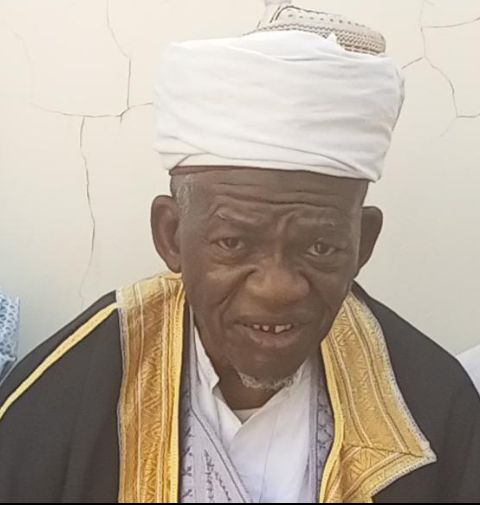
Malam Idris Musa

Malam Idris Musa, a traditional title holder of Shattiman Tudun Wada Community and the founder of the Interfaith Mediation Centre in Kaduna State, North West region, explained the need for tolerance and understanding among people of different tribes and religions for the sake of peace.

“As long as there is tolerance and endurance, all things will work fine. But the moment you use politics, saying you were being victimized for being a Muslim or a Christian, you will not get it right.The only way to get it right is by sacrifice, patience, and understanding from others’ points of view. When you put all these into consideration, then you get peace, reconciliation, and tolerance among different ethnic groups.”

He shared his personal experience of attending Saint Augustine Primary as a Muslim in Tudun Wada in the 1960s, which led to him having friends across different tribes. He emphasized the importance of going back to the genesis of the religion to respect each other’s faith and tribe.

“If we can go back to our genuine life to value individuals as Christians or Muslims and not commercialize Islam or Christianity, it will be better for us.” 

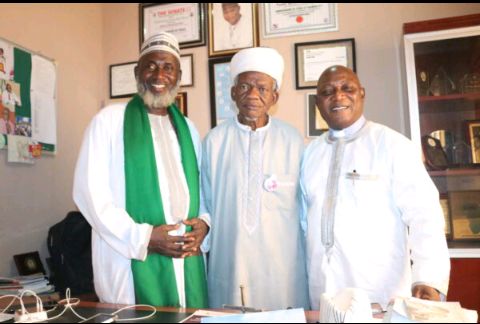
Pastor James Wuye, Malam Idris, and Imam Nurayn Ashafa 

Pastor James Wuye, co-director at the Interfaith Mediation Centre, emphasized the role of building peace among people of different faiths as a solution. He stressed the necessity for people of faith to come together, stating, “As long as people of faith come together to discuss common concerns, there would be that synergy flowing naturally to the followers.” 

James emphasized the biblical mandate for Christians to be in peace with others, warning that neglecting this call only leads to violence and hate.

“So there is no alternative to building peace among people of different faiths because that is the only way we can have the kind of peace we are looking for in the society. 

“I advocate for that, and I know the more you preach peace, the better the people are. So let’s talk about peace, breach the gaps, work in peace for our followership to see us being transparent about it,” he said.

Speaking about his friendships with individuals from other faiths, including Malam Idris, James emphasized the nobility of fostering such relationships.

James highlighted the significance of his relationship with Imam Nurayn Ashafa, a Muslim cleric and co-executive director at the Interfaith Centre, in building peace. 

“Our friendship has gone a long way in making others love God, know God, and live in peace with one another. It’s about learning to live together. As we work together shoulder by shoulder, we realized that our fraternity has a way of healing people,” he explained.

Discussing the centre’s activities, James outlined its role in advocating reconciliation, mediation, trauma support, and bringing divided communities together. The centre’s efforts have led to peace declarations and resolutions of inter-marriage issues.

Ashafaspoke about the role of interfaith from an Islamic perspective, citing Quranic verses encouraging Muslims to engage in dialogue with people of other faiths, cultures, races, and traditions.

“Oh people of the book, let’s come to a common term between us and you so that we reason together and dialogue together,” he quoted from the Quran.

Ashafa also emphasized the positive impact of interfaith dialogue, acknowledging its historical success in Islam. He shared examples of their work in communities, such as Yelwa Shendam, Plateau State, where interfaith dialogue has maintained peace since 2006.

“Interfaith relations and interfaith dialogue are cardinal ethical values that Islam upholds. Every sincere Muslim must work with it, especially in a multi-ethnic and multi-cultural setting like ours in Nigeria,” Ashafa stated.

Talking about his relationship with Pastor James Wuye, Ashafa highlighted their role as models of interfaith coexistence, showing that people of different faiths can live side by side, respecting each other’s beliefs.

“We have traveled to different parts of the world as role models show that people of different faith can coexist side by side with different religions, different cultures, different race, different ideological background,” he said.

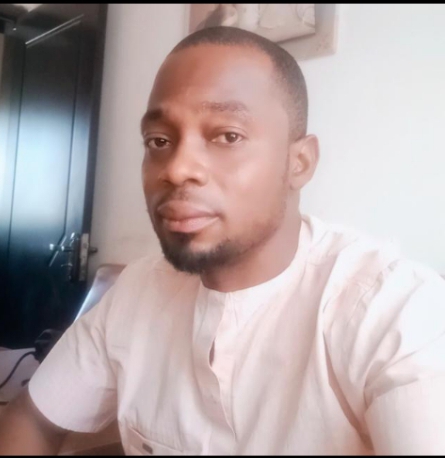
Sule Adams

Sule Adams, a Gbagyi Christian, shared his experience during the 2000 crisis in Kaduna, where his Muslim Hausa friend saved him and others by guiding them to safety.

“Reflecting on the 2000 crisis, I realized that genuine friendships formed across religious lines are a shield during turbulent times, proving that unity is the cornerstone of community resilience.

“My childhood friend, a Muslim Hausa by tribe, was the one telling us the safe road to follow. He saved our lives by telling the rioters we were all the same in his Hausa language”.

Adams highlighted how sharing experiences has contributed to peace promotion in the community.

“I share my experience not just to recount history but to inspire others to embrace diversity. Our shared humanity should be the guiding principle for building a more harmonious society. If we can return the love and understanding among ourselves irrespective of our differences, it will help us a lot in this country in terms of peace building.”

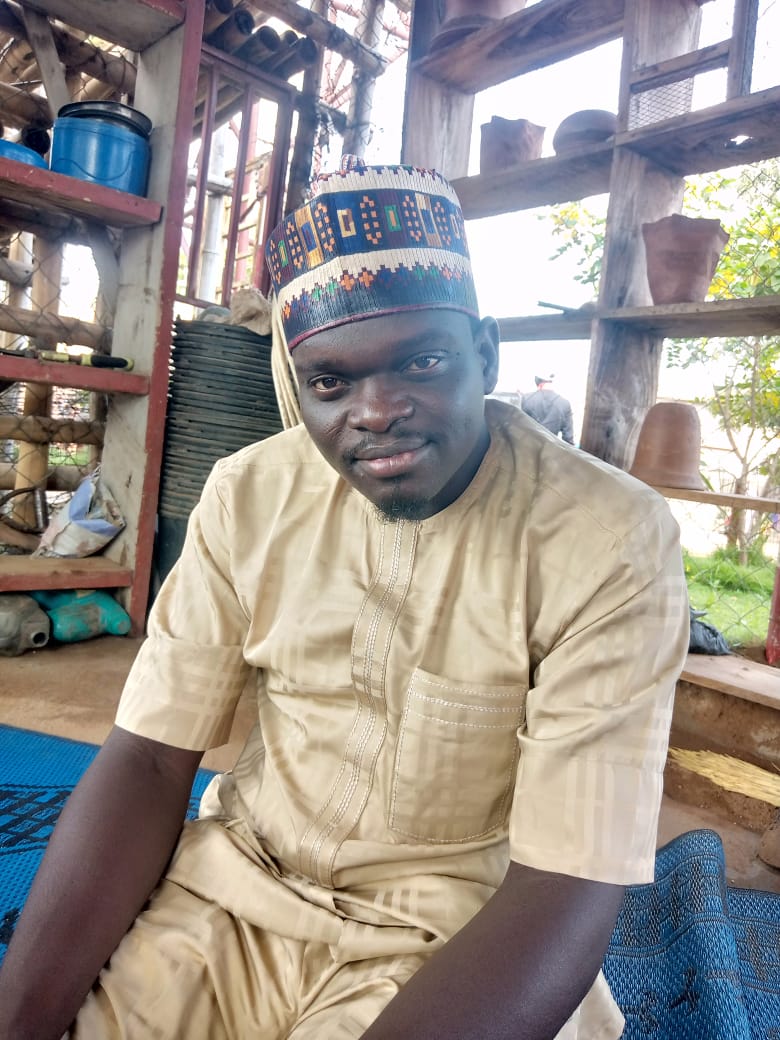
Aminu Salisu

Aminu Salisu, a Hausa Muslim, emphasized the positive impact of relationships with people from other tribes and religions on his understanding and appreciation of human beings.

“My friendship with Sunday Adaji an Idoma, a Christian from Benue State, taught me that true bonds surpass religious boundaries. His regular visits to my house showcase that genuine connections endure despite external challenges.

“As our community changed after the 2000 crisis, my relationships with people from other tribes and religions have helped shape my understanding of human beings and have also helped me to cherish peace.” 

Blessing Eko Sunday

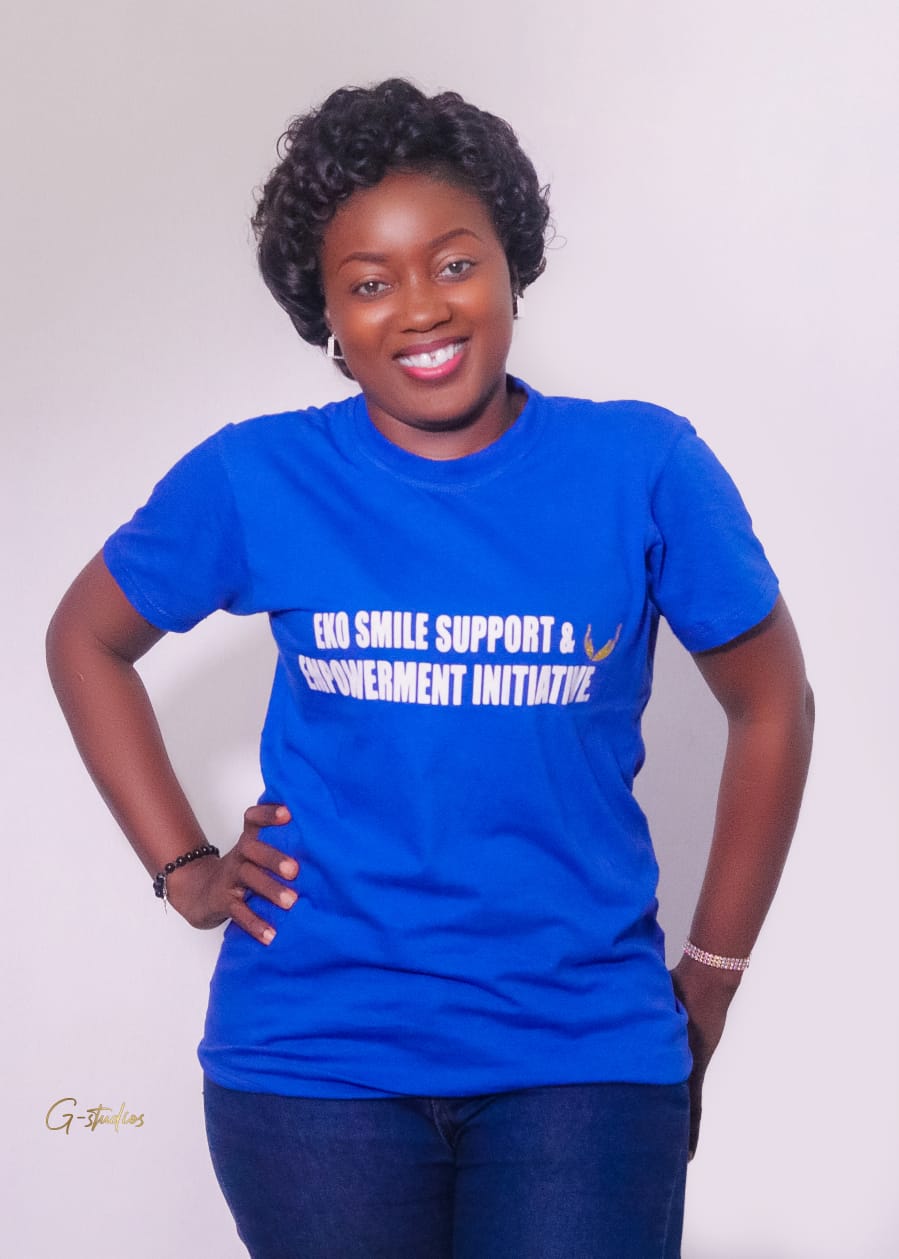
Blessing Eko Sunday, an Egede Christian from Benue State North Central Nigeria shared her story of building a mutual relationship with a Muslim co-worker named  Khadija, an Ibira lady from Kogi State breaking  stereotypes to promote peaceful coexistence.

“Khadija and I dismantled misconceptions about our tribes through open dialogue. Our friendship exemplifies that understanding and empathy can bridge gaps, fostering a more enlightened society.

“In founding my NGO, Eko Smile Support and Empowerment Initiative, the acceptance I experienced in interfaith friendships translated into a commitment to inclusivity, emphasizing that collaboration across religious lines can positively impact humanitarian efforts.

“My relationship with her (Khadija) helped break that perception, the stereotype I had about her tribe. It  helped lead to understanding of her culture, religion and values.The acceptance leads to peaceful coexistence.” 

Peace News Network recently published a video exploring efforts to build peace between farmers and herders in Nigeria. You can sign up for our monthly and weekly newsletters to never miss out on future stories on peacebuilding, including upcoming projects on Nigeria.