

For many decades, the rural community of Njobokazi, located at the outskirts of the eThekwini metropolitan municipality in South Africa’s KwaZulu-Natal province, has been the scene of violent conflict between local factions. Many people have been killed and many houses and community assets destroyed. While most people killed were the men who fought—including those from the family of Mfanozelwe Shozi, one of the authors of this article—less attention has been paid to the role of women, both as victims of violence and as peacebuilders.
Much of the violence has been driven by a conquest mentality, informed by ubunsizwa, an aggressive form of masculinity in which the winning faction is not satisfied with defeating their opponents but instead drives them out of the village altogether, fearing that they might regroup, strategize and attack to regain the area. This leaves the victim’s families, some now headed by women, in a very vulnerable position.
The basis for the conflict has varied over the years, sometimes being conflict over land, over which group had power and financial resources, or in more recent times political differences. A further trigger for violence has been men’s competition over women.
Women play a central role in the early socialisation of boys into gender roles, with women collecting wood and water and taking care of cooking and cleaning, while men take cattle out, go hunting, and later find jobs in town. A key element in the perpetuation of violence has been how men and older boys socialise boys to be aggressive, starting with stick fighting in which defeat is reviled. They are then recruited into attacks as part of an impi, an armed group. In recent years, people in Njobokazi have hired hitmen to resolve conflicts in business and politics.
Shozi’s doctoral study used action research in the years 2020 to 2021, with the aim of building peace in Njobokazi. This process involved traditional community meetings, with women sitting separately from men and with the voices of men dominant.
Women were resilient, but tended to underplay both their sufferings. Some women lost husbands or sons, observed their children not going to school, lost property, and sometimes were humiliated by men from enemy factions. A limitation of the research was the difficulty in getting information on sexual violence, given the stigma against speaking about it; evidence from other studies shows that this is a major element of war.
While war imposed a heavy burden on women, women took on leadership roles during this time, including in peacebuilding. In the absence of men, women would take over such responsibilities as herding and milking cattle. If negotiations failed and their faction lost, women would decide to leave the area, with men following them. When they were out of the area, they participated in discussions that brought people together to talk and find a solution to the problem.
Under official battle rules, women were not allowed to be the main targets of attacks, so in one incident a woman saved her husband’s life by throwing herself over him during an attack.
Women intervened through their relationships with men to argue for peace. As one woman said, “…we would in our corners confide to our husbands and boyfriends that they must stop fighting, but men would never listen.” They would also speak directly to fathers, brothers and sons. In negotiations to end fighting, since women did not engage in direct combat they were central to peace processes. For example, women played a role in delivering messages to the opposite side.
The action research involved, first, workshops to recognise the impact of the violence and to map both the drivers of violence and the incidents that would trigger war. This led to community workshops that developed ways of building peace, drawing on two well-known peace initiatives: the Alternatives to Violence Project (AVP), an organisation that supports facilitators of such workshops, and the Institute for the Healing of Memories, established to heal the scars of violence and oppression. In addition, there was a major cleansing ceremony that drew on traditional rituals and animal sacrifice.

As a result of these interventions, an organization was formed in the area which assisted with psycho-social support to women, and the community started building a strong relationship with the local office of social development. As of 2025, there has been no return to fighting.

The research project did not start with a focus on the role of women, but led to a realization of the resources for peace that women hold, and the need to develop those resources to build lasting peace.
Keywords: South Africa, Njobokazi, KwaZulu-Natal province, eThekwini Metropolitan municipality, village conflict, conflict resolution, peace, South African

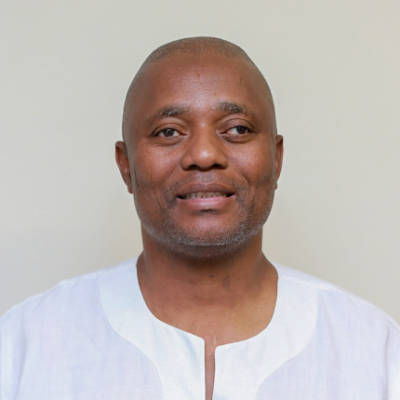
Dizline Mfanozelwe Shozi
Dizline Mfanozelwe Shozi is the Deputy Director of the Community Engagement and Development Directorate at the Mangosuthu University of Technology, as well as a former lecturer and project Manager for Durban University of Technology’s Imbali Education and Innovation Precinct. He was the chairperson of the South African Commission for Gender Equality. He is currently a Sonke Gender Justice board member and deputy chairperson, and Chairperson of the Valley Trust Board. He holds a PhD in Peace Studies from his studies at the International Centre of Nonviolence, Durban University of Technology.

Crispin Hemson
Crispin Hemson is an academic, formerly Head of the School of Education at the University of Natal and then Director of the International Centre of Nonviolence at Durban University of Technology. His main focus has been on pedagogies for peace, and his doctoral study addressed ways of teacher education that build peace in a context of violence. He is also an environmental activist who works to protect an urban nature reserve.