Home Blog Page 87

Bottom-up Peacebuilding in Myanmar

0

The road to democracy and peace in Myanmar has been long and fraught with false hopes and backsliding. The democratic gains of the 2010s, which included a bold peace process and the inauguration of a civilian government under Aung San Suu Kyi, descended into 2021’s military coup plunging the country into nationwide conflict between Myanmar’s despotic military leadership and the country’s highly diverse resistance forces. Despite the flood of international development assistance in the 2010s, the understanding and reach of international actors into Myanmar’s conflict-affected areas remained limited. This context makes for particular challenges in localising peacebuilding efforts, requiring novel methodologies.

Promising alternatives to localising peace have come in the form of processes pioneered by Adapt Peacebuilding and the Relief Action Network for IDPs and Refugees (RANIR).  From 2013-2020 Adapt and RANIR implemented a civil society-led peacebuilding process utilizing an adaptive peacebuilding methodology called Systemic Action Research (SAR). This approach did not pre-determine what topics would be worked on, what outcomes were expected, who could participate or when activities should be completed; these decisions were taken by local participants themselves.

This approach to peacebuilding has been used in the armed conflict in Myanmar’s north between the Kachin Independence Organisation (KIO) and its allies and the Myanmar military. This conflict has had devastating consequences for local populations in terms of battlefield deaths, protracted displacement, and human rights abuses against civilians. Furthermore, the conflict has had indirect negative consequences including environmentally and socially-damaging business practices, epidemic rates of drug cultivation and use, world-leading rates of landmine contamination, and widespread psychosocial trauma.

The implementation of SAR in 2015-16 started with training in systemic inquiry, a process of participatory data collection and analysis. 30 community researchers from RANIR and other community-based organisations in and around the city of Laiza conducted semi-structured interviews, exploring issues of local peace, humanitarian, and development dynamics. These interviews produced 210 narratives of interviewees’ lived experiences. Community researchers were encouraged to gather narratives from ordinary people (e.g. farmers, shopkeepers, pedestrians) and marginalised people (e.g. internally displaced people, drug users).

Community researchers were trained to analyse these narratives using systems mapping. Participants closely examined each narrative, identifying the inter-related causes and consequences associated with a range of issues that they presented, such as ‘employment’, ‘displacement’, ‘drug abuse’, etc. The participants produced highly dense systems maps, depicting multiple interrelated causal chains and descriptive information about the complex causes of local peace and development issues. 

Researchers identified dynamics of particular interest in the maps and chose three priority peacebuilding topics: drug abuse, the right of return for refugees and internally displaced people, and social cohesion between host communities and internally displaced people. Three action research processes were formed to design and implement their respective peacebuilding activities. More than 17,000 people were directly involved in the process, helping address the significant challenges of ‘process exclusion’ and ‘content exclusion’ that are characteristic of other peacebuilding processes in Kachin State and political processes in Myanmar more broadly. 

On the issue of drug abuse, catastrophic rates of local youth addiction to opium and amphetamines were commonly understood prior to this process as the result of the long-term genocidal strategy being waged by the Kachin’s ethnic adversaries. When the actual lived experience of drug users and their social network was analysed by community researchers, a much more complex picture emerged: the biggest risks of relapse were being disowned by their families, or discriminated against by their community. Also, drugs were readily available in local schools and prisons. This indicated that the potential alleviation of drug problems could be within reach of local actions, such as preaching acceptance rather than discrimination against drug users in local churches, lobbying for rehabilitation rather than punitive strategies in the local justice systems, and multiple means of raising awareness of drug risks in local schools and camps for displaced people. Drug abuse awareness-raising messages were delivered to thousands via community radio and town hall presentations to at-risk populations in schools. Community peacebuilders advocated for changes to government drug policy, leading to a refocusing on rehabilitation rather than punitive approaches, prohibitions against alcohol and drug sales in IDP camps, and the inclusion of drug awareness-raising materials in school curricula for the first time.

This case demonstrates a novel peacebuilding methodology and some promising results. It points to the potential of seeing peacebuilding as a process of social mobilisation, which can scale up to include ever greater numbers of people, and affect national policies and peace processes. Local peacebuilders have shown how much can be achieved by combining small levels of outside support with the resources, knowledge, and voluntary time that is available locally.  

Featured image: Protests

Can Textbooks Build Peace?

0

In a number of countries, textbooks have been blamed for promoting division and conflict. In other countries, they have been blamed for misrepresenting atrocities and injustice for the sake of promoting a false unity. So the key question is, how can textbooks teach the truth, no matter how painful, while also helping societies reconcile and build long-term positive peace. Peace News spoke with experts on how textbooks can be revised to be both a source of an accurate and truthful history while also helping with reconciliation and social cohesion.

Experts interviewed: Atif Rizvi, Denise Bentrovato, & Natasha Robinson

Civil Society Organizations work to end Cameroon’s Anglophone Conflict

Protests against violence in Cameroon

Cameroon is composed of an 80% French-speaking majority and 20% English-speaking minority concentrated in the Northwest and Southwest regions, the former British Southern Cameroons. Since 2016, an unprecedented violent conflict has been ongoing in the Anglophone regions. This emerged when peaceful protests by lawyers and teachers against the francophonisation of the distinctive anglophone legal and educational systems were violently repressed by the government. The Cameroon Anglophone Civil Society Consortium (CACSC) then initiated ‘Operation Ghost Towns Resistance’ with weekly shutdown of schools and businesses in the anglophone regions and called for two-state federalism. The government responded in January 2017 by banning CACSC and arresting its leaders on treason and terrorism charges and imposing a three-month internet blackout. Such state repression led to separatist voices taking centre-stage and the emergence of armed groups. The unilateral declaration of the Republic of Ambazonia on 1 October 2017 was supported by mass demonstrations, with at least 17 people killed by security forces. Subsequent clashes between the military and armed separatist groups have been ongoing. The conflict has resulted in hundreds of villages razed, over 6,000 people killed, 1.1 million people displaced, 2.2 million in need of humanitarian assistance, and approximately 700,000 children suffering educational disruption.

The roots of the conflict can be traced to Cameroon’s colonial origins and a divisive post-colonial political landscape. The latter include the abolition of the 1961 reunification federal constitution by President Ahidjo in 1972 and President Biya’s 1984 Decree renaming the country as ‘La Republique du Cameroun’, the name adopted by French Cameroon at its independence in 1960.  Anglophone voices that challenged these unlawful changes in earlier decades were quelled by government forces. While political liberalisation in the early 1990s enabled civil society groups to emerge,  civic space quickly shrunk again with violent clashes with the army in 1991, which has continued to this day.

International responses to the current conflict have been very limited, with little pressure from Western governments and no intervention from the AU or UN. A Swiss government peace initiative collapsed in September 2022 when Biya’s government reportedly withdrew. The only internal dialogue initiated by the government, the ‘Major National Dialogue’ in 2019, limited the participation and voices of civil society organizations (CSOs) and other key stakeholders. Given the failure of top-down interventions, our research interrogated the following: What contributions have CSOs made to seeking conflict resolution and peace? How have their efforts been constrained by shrinking civic space? What strategies are used by CSOs to overcome such constraints? 

Findings reveal that CSOs contribute significantly to conflict resolution efforts. They provide humanitarian relief; trauma healing; organise peace campaigns and peace education; and document human rights violations. Humanitarian relief is of critical importance as it enables affected communities and vulnerable groups to meet their basic needs while demonstrating solidarity and CSO legitimacy within local communities. Further, using homegrown non-violent resistance such as the ‘lamentation campaign’ (mourning as a form of protest), CSOs have brought attention to the plight of local populations, while urging warring parties to the negotiation table. 

However, CSOs’ efforts are hampered by the shrinking of civic space by the authorities, inclusive of ‘legal’ and ‘repressive’ measures. Participants underscored that in addition to the banning and arrests of the Consortium and its leaders, regular government administrative controls deny many CSOs from accessing affected communities. CSOs are also subjected to intimidation and violence from the warring factions including office break-ins and kidnappings. Understandably, many CSOs are afraid to openly share their views or advocate for a political solution to the conflict 

To navigate these constraints, CSOs use diverse strategies such as awareness-raising activities, community dialogue, coalition-building, and documenting, verifying, and disseminating information. The Southwest Northwest Women’s Taskforce is a successful example of an organization using these tools to enhance collective action toward peace. CSOs use some strategies as ‘created spaces’ to build critical consciousness around peacebuilding issues. Nonetheless, operating in such a constrained space, CSO initiatives for peace can only go so far, and therefore their influence on conflict resolution remains limited. This supports arguments that in conflict-affected societies, peacebuilding from below alone may not suffice, and additionally requires leverage with and by national and international efforts.

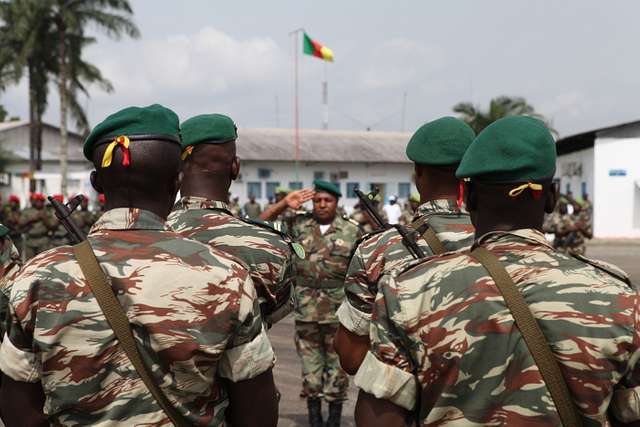
Cameroon military
Cameroon military troops

Prospects for peace in the Cameroon Anglophone Conflict remain elusive after six years of conflict. The Cameroon government remains intent on a military solution to a political problem, while armed separatist groups have become entrenched in long-term conflict. CSOs have advocated for peace in imaginative ways yet are unable to propose a political solution that addresses the root causes of the conflict, knowing that this would bring down the repressive force of the state upon themselves.

Featured images: Protests ; Military (Austin Berner, Picryl)

Can Peace Media Reduce Conflict in Pakistan?

0
Banuchi_Elders_discussing_in_Jirga
Banuchi Elders partaking in Jirga

Since its inception as a free state in 1947, Pakistan has been marred by a number of deadly conflicts. These included territorial conflicts with India and Afghanistan, secessionist movements in the Balochistan province bordering Iran, ethno-political conflict among the various ethnic groups, sectarianism and the civil-military rift. Contrary to the optimism of the founding fathers of the country, the nascent state failed to devise institutional mechanisms to address these conflicts. Over the years, these conflicts have degenerated into deadly violence. According to various human rights groups, more than two hundred thousand people have died in these ethno-security and religious conflicts. Besides the human toll, these conflicts have incurred huge economic losses. For example, it is estimated that the war against the Taliban fighters has cost the Pakistani government over two hundred billion dollars. The socio-cultural impact of these deadly conflicts is also been immense. An acute form of societal acrimony exists where people living in different parts of the country look at each other with suspicion. The decade-long violence has diminished the chances of debate and understanding, and society is sharply polarized with a rise in hate and animosity.

In the face of the breakup of the national institutions to bring some normalcy to this conflict-ridden country, the media was expected to spearhead a reconciliation process. Unfortunately, the media has proved to be a source of discord. The conflicting parties in the country are using the media for their interests and the latter has been more than willing to support them. The Pakistani media has been found to be escalatory and propagandistic. Instead of sharing all the perspectives on these conflicts to help resolve them, it has adopted an approach that is destructive to peace. As a result, despite a long history of conflict, people are ill-informed about their causes and contexts of these conflicts. People also know little about the alternatives to the prevalent perspectives and hence public opinion is often not in favor of peace and the solutions to ending violent conflict. Unfortunately, it is hard to convince local communities that their woes stem from these conflicts. 

The recent spate of violence and hate incidents point to a grim situation. The media is partly responsible for this malaise for its pro-violence coverage. There is an urgent need for the media to apply greater analytical skills to explore peace-oriented strategies to these violent conflicts. These strategies should be insightful, comprehensive and clarify the possibilities of resolving conflicts.

The media in Pakistan can kick-start a process of negotiation. It can bring estranged groups together. This can be done by arranging discussion panels where conflicting parties, common people and peacemakers can be brought together. Such discussion panels already exist in various conflict zones in Pakistan in the form of traditional Jirga—a meeting place in a locality where people sit together to find solutions for a prevailing problem. The country’s most famous TV channel Geo TV runs a primetime program called Jirga where initially contentious issues were discussed and solutions were sought. Unfortunately, due to the commercial pressures, this program is now no different than other programs where issues are sensationalized to attract larger audiences.

Like in other parts of the world, the news media in Pakistan has greatly benefited from the conflicts in Pakistan. The country’s two major media organizations Jang Group and ARY Group came to the limelight soon after the 9/11 incident. Likewise, dozens of other TV channels and newspapers were established during various conflicts to provide conflict-related information. This commercial logic has driven the media towards conflict escalation instead of agents for peace. Peacemakers had hoped that an increase in media outlets would lead to a variety in content. However, this hasn’t happened.

Despite the predominance of military-sponsored propaganda content, there are some instances of peace-oriented media. On March 4, 2022, when militants attacked a mosque belonging to Shia Muslims in which 58 people were killed, the Pakistani media openly criticized the perpetrators and highlighted the broader factors that fueled this conflict. Coverage reported on the problems of common people and sympathized with those who were suffering. They called upon the government to take measures to protect minorities. One reason for this was that military and political elites were in favor of resolving the sectarian conflict, which led the media to follow the elite views. 

Studies show that the military, security narratives, and the commercial interests of the media are the key barriers to practicing peace journalism. While it is difficult to change this situation in the short to medium term, journalists can opt to be creative and provide more constructive alternatives. For example, they can focus on the plight of victims and highlight their issues. Seeing their countrymen in distress can promote dialogue. Such an approach would give a new perspective on these conflicts. Likewise, most Pakistanis are unaware of the real contexts of the conflicts and simply follow the perspectives of the military elites. Detailed background information on these conflicts would lead to an informed citizenry. Contextualizing would help people know the importance of other options like peace agreements rather than the mere use of force to resolve conflicts. Similarly, the inclusion of wide-ranging political and peace perspectives in media debates would help present a transparent picture of the situation.

Featured images: Banuchi Elders ; Soldier (Bumble Dee / Adobe Stock)

Can Ethiopia Achieve Peace?

0

The Ethiopian government and the Tigray People’s Liberation Front have recently agreed to a permanent ceasefire, ending hostilities that have left hundreds of thousands dead. The ceasefire agreement took place in Pretoria, South Africa, hosted by members of the African Union. The agreement calls for the Ethiopian federal government to assume control over roadways and airports throughout the region and restore funding, aid and relief to those affected by the civil war in the Tigray region.

Experts interviewed: Goitum Gebreluel, Kjetil Tronvoll, & Roselyne Omondi