

In a world where peace conferences are often dominated by policymakers and government officials from the Global North, a new kind of gathering took place last week from October 13 to 17 in Nairobi, Kenya, which aimed to put local peacebuilders at the heart of the conversation. Titled Peace Connect and organized by Peace Direct, a leading international peacebuilding NGO, the gathering (“not conference,” as the organizers emphasized) drew over 550 participants from 85 countries, with the majority of attendees from the African content.

Dylan Mathews, Peace Direct’s CEO, explained the motivation behind the gathering. “Most peace conferences are held in places like London, Washington, or Geneva, and the people who attend are rarely those directly affected by conflict,” he said. “We wanted to do things differently—decenter Global North expertise and put the spotlight on local peacebuilders who are living through these conflicts and finding solutions.”

Unlike traditional conferences, the event intentionally limited the number of Global North participants, and avoided the usual plenary sessions featuring high-profile policymakers. Instead, the focus was on creating an environment where local peacebuilders could share experiences, build solidarity, and learn from one another. The event centered on grassroots peacebuilding and its organization, and mainly involved small scale discussions. In some ways, the gathering itself was a prototype for reshaping global conflict resolution – local, bottom up, collaborative and inclusive of marginalized voices.
Building a Global Peacebuilder’s Ecosystem
One of the gathering’s primary objectives was to foster solidarity—not just across borders, but within countries where civil society is often fragmented. “It’s important for activists from the same country to connect and realize they’re part of something bigger,” Mathews noted. “We want people to leave here knowing they have a global network of support.”
Through solidarity spaces, participants shared personal stories and strategies, highlighting both the challenges and the agency of local communities. “It’s not just about doom and gloom,” Mathews emphasized. “It’s about what people are doing to make a difference.” The event also aimed to raise the profile of conflicts that rarely make international headlines—a goal shared by Peace News Network (PNN).

While the gathering covered a range of topics, three themes that were especially prominent focused on decolonizing peacebuilding, indigenous peacebuilding, and entrepreneurial peacebuilding. The three themes tie closely together and form an overall philosophy about current peacebuilding practice and how it could be transformed to be more effective and sustainable, especially in a world of shrinking aid funding for peacebuilding from the Global North.
Central Themes
While the decolonization of peacebuilding may sound like a far-left notion at first, it speaks to the failures of the current global peacebuilding system, which is based on asymmetric concentrations of knowledge and power in the Global North, and their unidirectional flow to the Global South. These relations are often historic and remnants of colonialism from past decades and centuries, which are still sustained even with the end of official colonies.
For peacebuilding, these relations are rooted in assumptions that the West is the source of expertise for solving conflicts globally, and that the Global South lacks the capacity to solve its own conflicts. This also manifests in the flow of funding for peacebuilding, which usually involves Westerners who parachute in to implement their latest programs, with locals playing the role of passive recipients.
The decolonization of peacebuilding aims to turn current practice and its assumptions on their heads, and allow local knowledge and practices to dominate and drive the process.
At Peace Connect, the organizations and individuals participating, and most of the discussions organized, explored how to break this colonial legacy and implement solutions based on a post-colonial future. Many of the participants, in fact, were those pioneering such practice, including many involved in the use of indigenous peacebuilding.
Indigenous peacebuilding involves the use of traditional pre-colonial methods to resolve conflicts. Indeed, much evidence shows that the people native to various countries already had a rich history of solving disputes before colonial powers arrived, and that these approaches, which were often discarded as outdated and unscientific by colonial powers, have a track record of working effectively in their local contexts.

Another key theme of the gathering revolved around shrinking funding sources for peacebuilding, highlighted by the closure of USAID and reallocation of aid funding to defense funding in many Western capitals. While this raised much concern and fears amongst participants about their ability to sustain their work—with many organizations and projects already shut down or shrunk significantly—it also forced discussions about new opportunities to find alternative funding sources, which could ideally be local and sustainable, thus allowing for a financial decolonization.
Many were inspired by examples of organizations who had engaged in peacebuilding entrepreneurship, and found new revenue sources based on meeting local needs. Could such success stories inspire others in different settings? A key goal of this gathering was to learn from each other and not only build networks of support, but also learn lessons about best practices.
A Message of Hope Amidst Uncertainty
As the gathering drew to a close, many participants left with a renewed spirit of purpose and a sense of greater hope for the future. According to Mathews, “amidst all the despair and gloom, we must hold on to hope. The 550 people here show what’s possible…Their work can be scaled and replicated, proving that a more peaceful world is within reach.”

Keywords: peacebuilding, gathering, local, peacebuilders, conference, peace, conflict, conflict resolution, Nairobi, Kenya, Africa, African, decolonize, decolonization, aid, USAID

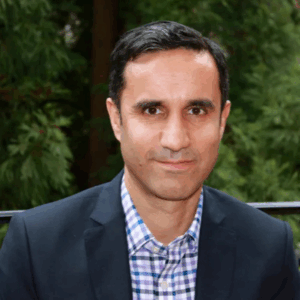
Babak Bahador
Babak Bahador is a Research Professor at the School of Media and Public Affairs (SMPA) at George Washington University (GW). Babak’s current research focuses on the overlap of media and international relations, with primary focus on peacebuilding. At GW, Babak directs the Institute for Public Diplomacy and Global Communication and the Media and Peacebuilding Project, which both aim to bridge the gap between academic research and practice. He also directs Peace News Network, which produces stories about peace builders and peacebuilding from conflict fragile environments. Babak holds a PhD in International Relations from the London School of Economics.