
Mariocy, a 39-year-old Venezuelan mother living in a rural area on the outskirts of Arauca’s capital, says she constantly faces obstacles when it comes to finding fairly paid work and accessing basic healthcare for her family. “For us Venezuelans it is difficult to get a job here,” she states in an interview with Médecins Sans Frontiéres (MSF). “In Arauca, we have received health only through mobile clinics of [humanitarian] organizations.”
Arauca is located in northeastern Colombia and shares a border with Venezuela, making it a common destination for Venezuelan migrants and refugees. Since 2022, the region has frequently appeared in headlines due to armed conflict between the National Liberation Army (ELN) and dissident factions of the Central General State (EMC). The indirect experiences of the civilians impacted by this conflict, however, are rarely discussed in the media. For many residents, “peace” is not defined by ceasefires or negotiations, but by access to basic needs. Can a family move freely? Can a mother reach a clinic for her sick child without crossing dangerous territory?
The crisis in Arauca is not only about battles and bullets. It is about how conflict seeps into daily routine. A recent analysis by the Global Protection Cluster identifies these urgent risks as the “illicit impediment and restriction of freedom of movement, confinement, and forced displacement.” The same report notes that as of 2023, 34% of the department’s population has been recognized as victims of the armed conflict, leaving thousands cut off from education, food, and especially basic medical needs. As Siham Hajaj, MSF’s head of mission in Colombia, tells Peace News Network (PNN), “For the communities caught in the middle of clashes between armed groups and for thousands of migrants, access to healthcare has been hampered by multiple effects associated with the armed conflict.”

So where exactly do health and peace intersect? When families cannot move freely and experience limited access to primary medical care, health becomes a fault line that increases stress and mistrust. Services deteriorate, rumors spread, and worst of all, communities fracture. In a region heavily populated with displaced Venezuelan families, many are blamed for community hardships and become alienated. According to the Global Protection Cluster, Venezuelan families in Arauca are often denied services and face discrimination, including risks of gender-based violence and child recruitment.
Reliable, inclusive healthcare does more than treat illness. It can function as social glue that softens community strain and transforms clinics into safe spaces for everyone. That is exactly what Médecins Sans Frontières (MSF) has been doing since March 2025. Rather than forcing patients to travel long distances through risky territory, MSF brings care to the rural, neglected, and conflict-affected municipalities of the department, including Tame, Arauquita, and Puerto Rondón. Hajaj says, “Between March 3 and November 13, 2025, [MSF] conducted 4,899 general medical consultations, 801 sexual and reproductive health consultations, 65 consultations for pregnant women, and 314 individual mental health consultations.”

of Tame, Arauquita, and Puerto Rondón). Between March 3 and November 13, MSF teams conducted 4,899 general medical consultations, 801 sexual and reproductive health consultations, 65 consultations with pregnant women, and 314 individual mental health consultations. Photo by Guzmán Botella-MSF, used with permission.
While these numbers are impressive, the real impact becomes clear through the stories of those receiving care from MSF. “The children get sick all the time,” a pregnant Venezuelan mother who migrated to Arauca tells MSF. “I don’t have a [Temporary Protection Permit] or a card but thank God I was found by a foundation and they are the ones who are helping me with the consultations.”
A mobile clinic and the accessibility to healthcare cannot end armed conflict. It can, however, create shared ground. Host communities and newcomers sit in the same waiting areas, rely on the same staff, and experience a rare form of fairness, where treatment is based on medical need. “Neutrality and independence,” says Hajaj, “allowed us to reach thousands of patients in areas affected by armed conflict.”
This consistent, neutral healthcare strengthens social unity, reduces fear and exclusion, and rebuilds trust across divided communities. As Dr. Tedros Ghebreyesus, the Director-General of the World Health Organization (WHO), puts it, “There cannot be health without peace, and there cannot be peace without health.” Through its work in Arauca, Colombia, MSF has demonstrated that accessible healthcare is more than a service; It is a peace-building system that treats people as worth serving.
However, providing healthcare in Arauca and other regions scarred by violence remains extraordinarily difficult. According to a WHO report on health systems recovery in fragile and conflict-affected situations, it is common for violence to damage infrastructure and clinics, drive health workers away, disrupt medical supplies, and prevent people from safely reaching care when they are unable or unwilling to reach facilities in insecure areas. When roads are blocked and shut down without warning, even basic services can be out of reach. In places where a clinic can close at the sound of gunfire, neutral healthcare becomes the thin line that allows care to keep moving forward.
Keywords: healthcare, health, Arauca, Colombia, peace, conflict, conflict resolution, Médecins Sans Frontiéres, World Health Organization, clinic, access

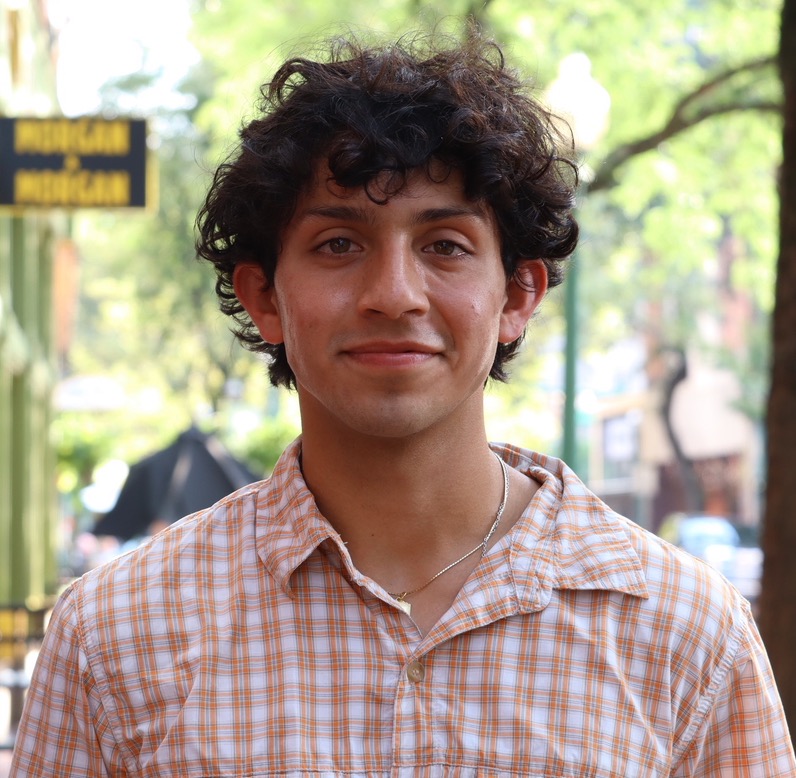
Samir Jones
Samir Jones is a sophomore at Tufts University studying film and biochemistry. He is fascinated
by the intersection of medicine and media, and in the future, he hopes to serve rural,
underserved communities as a physician that utilizes film to educate patients about health
strategies.