

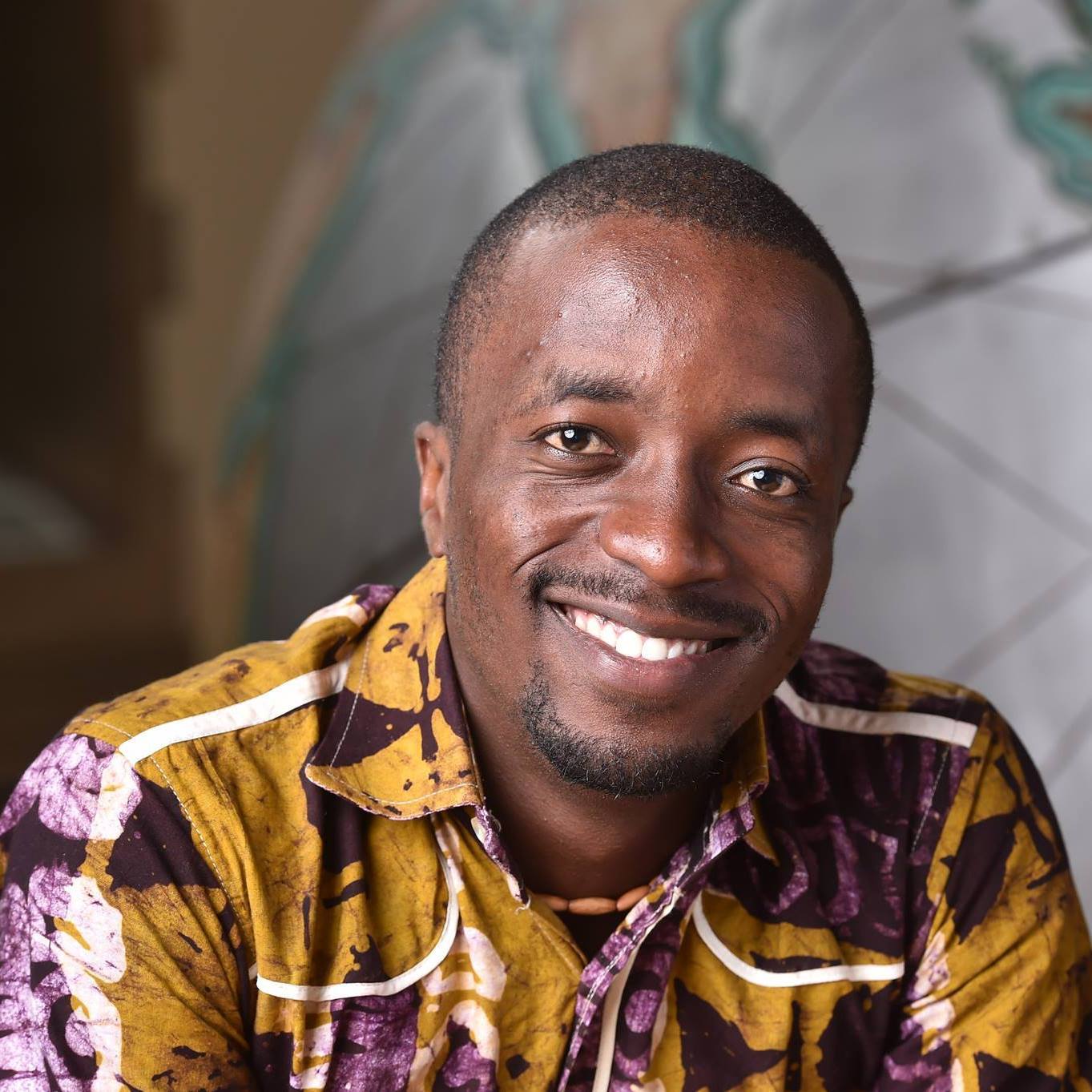
Op-ed: Christian Cito Cirhigiri is a peace journalist from the Democratic Republic of the Congo and founder of the Peacemaker 360 campaign.

The risks of violent protests, and the emergence of a civil war, are imminent in the Democratic Republic of Congo (DRC) if President Kabila holds on to power beyond December 2017. Among many efforts to prevent further escalation of violence and deterioration of democracy, Catholic church leaders through CENCO, a network of Catholic bishops in Congo, have been instrumental in leading top-down efforts aimed at diffusing tensions among parties supporting president Kabila, opposition parties, and social movements ready for a political change. However, in order to be more effective, Catholic Church leaders’ advocacy efforts for peace needs to be supplemented by a bottom-up youth-led movement against violence.
A non-violent youth movement would act as a mechanism to credibly channel frustrations against the government. While protesting is a useful tool to manifest anger, youth run the risk of being killed – government forces have violently repressed all forms of civil disobedience. Supporting an ecumenical non-violent youth movement, the Catholic Church would expand its base to include half of the Congolese population, which belongs to other faith traditions. Together, the church would be able to foster non-violent spaces where young people from all faith backgrounds critically explore alternatives to pressure the current regime, from a united front. Such work would require that religious leaders put aside their differences in order to intensify an inter-faith dialogue aimed at defining common advocacy approaches for a swift and peaceful democratic transition in Congo.
As a united inter-religious front, a youth movement would help revive Congo’s already weakened civil resistance by forging national cohesion for the immediate organizing of elections, in the short term, to the strengthening of democratic institutions, in the long term. According to one study between 1900 and 2006, campaigns of non-violent resistance were more than twice as effective as their violent counterparts (Maria Stephan & Erica Chenoweth, 2012). These movements have resulted in successful transitions of power despite complex political situations such as in Iran, the Palestinian territories, the Philippines, and Burma. Similarly, a youth movement would result in strategic organizing and training of youth in civic education in order to better articulate its agenda for a peaceful and democratic transition, within legal boundaries.
In August 2017, young faith leaders from various religious backgrounds launched Jeunes Croyants Congolais en Action (JCCA), a non-violent and apolitical movement of young faith leaders who meet once a month to pray together, critically examine their roles in promoting peace, democracy, and sustainable development, in their communities. JCCA is active in Kinshasa, Kasai Oriental, Haut Kasai, and Goma, and continues to spread to other provinces. The motto of the movement is “Together let’s pray for Congo. Together let’s non-violently act for Congo’s peace and stability. Together, let´s save our future”. With more than 400 members from diverse faith backgrounds holding monthly prayers and vigils for the DRC, JCCA is one existing group that – if scaled up into a larger ecumenical youth movement and supported by inter-religious leaders – could shape the church´s political leadership. Young faith leaders face many risks in their non-violent resistance but are a burgeoning hope of positive inter-religious opposition to the current political impasse. Among other parallel efforts, Catholic Church leaders through CENCO can stimulate growth of such grassroots movements as part of their current contributions for a positive democratic transition in the DRC.
Photo: JCCA members, supplied by Christian Cito