

Editor’s note: While the conflict in Gaza is creating growing tensions and divisions, a number of peacebuilding organizations are working to reverse this trend and continue on a decades-long mission to build reconciliation. This is the mission of the Rossing Center. The following account is by Adi Marer, one of its members.
How do you raise a family in Israel? What kind of future will they have in this land? Even though I just started my Master’s degree at 25 years old, and am focusing on my personal, academic, and professional advancement; in the past months, I’ve found myself asking these questions. In part, my work with the Rossing Center for Education and Dialogue has offered me some answers, and some hope for what the future of this land might look like.
Despite the challenges that have beset our region, the Rossing Center remains steadfast in its mission to promote inclusivity, equality, and democracy among Palestinians, Israelis, Jews, Christians, Muslims, and non-religious individuals. Our commitment to this cause remains resolute as we continue our work within the education system and in mixed cities, advocating for grassroots cooperation and engaging with key stakeholders at all levels. Fostering understanding, empathy, and cooperation becomes even more crucial.
Education as a Catalyst for Change
In the Israeli context, the education system is separated and segregated, an experience I knew well as a young girl growing up here. At the same time, education serves as a powerful tool for shaping attitudes and perceptions from a young age. Recognizing this, the Rossing Center focuses on training principals and teachers in techniques that enable students to process their emotions and beliefs constructively. By providing educators with the necessary tools and resources, we empower them to foster environments where dialogue, understanding, and respect thrive. Our goal is to cultivate a generation of young people equipped to navigate complex issues with empathy and tolerance, without sacrificing the dignity of others. A core value I hope to instill in my future children.
Embracing a Multifaceted Approach
While our work within the education system and in mixed cities is crucial, we also understand the importance of engaging with key decision-makers and institutions at the top level. By collaborating with municipalities, ministries, and other stakeholders, we advocate for policies and initiatives that promote inclusivity, equality, and social cohesion.
Through our top-down approach, we seek to influence systemic change and create an enabling environment for grassroots efforts to flourish. By working with government officials and policymakers, we aim to address structural barriers and create opportunities for meaningful dialogue and collaboration at all levels of society. Our goal is to create a ripple effect that permeates every facet of society, from the highest echelons of power to the grassroots level. These are the same institutions, systems, and communities that my future children will inherit.
Looking Ahead with Hope
Expanding upon the Rossing Center’s initiatives and approach, it’s evident that our efforts extend beyond mere discourse; they actively contribute to the transformation of societal norms and structures. Our multifaceted strategy involves not only direct engagement with communities but also advocacy at the governmental level, leveraging partnerships and alliances to effect systemic change. Through our educational programs, we instill values of tolerance, empathy, and cooperation in the next generation, laying the groundwork for a more harmonious and equitable society.
Furthermore, our commitment to inclusivity extends to our organizational practices. We strive to ensure diversity and representation within our team, recognizing the importance of diverse perspectives in driving meaningful change. By fostering an inclusive and supportive work environment, we set an example for the broader community, demonstrating the benefits of embracing diversity and collaboration.
Looking forward, we remain optimistic about the potential for positive change in our region. While the road ahead may be challenging, we are buoyed by the resilience and determination of those who share our vision. With continued dedication and collective action, we believe that a future characterized by peace, justice, and equality is not only possible but inevitable. If not for us, for our children.
This gives me hope to start a family, which is also my Grandma’s dream. As she reminds me in Hebrew every time we meet, “Adi, you should plan on making the family bigger. When are you finally giving me great-grandchildren?”
I am confident that the future I hope to see for my children will come to fruition if we work together, strategically and systematically.

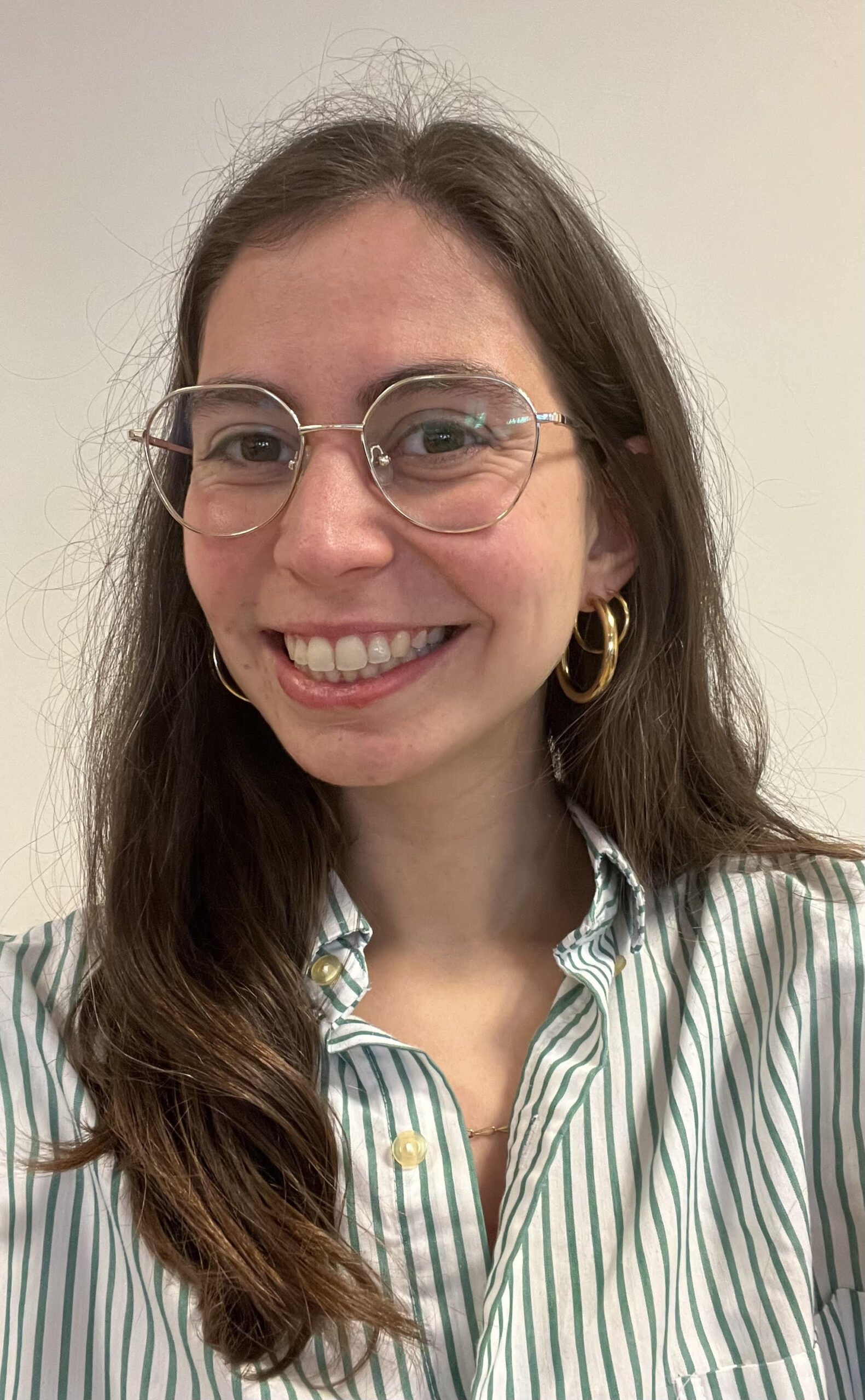
Adi Marer
Adi Marer is the Communication Coordinator of the Rossing Center for Education and Dialogue, she is also a facilitator in the organization's "Meeting Place" project. Adi received her undergraduate degree in the Department of Sociology-Anthropology at the Hebrew University of Jerusalem focused in Christianity. She is currently pursuing her master's degree in the Department of Religious Studies at the same institution.