

Bosnia and Herzegovina, over thirty years after the end of the war (1992-1995), still struggles with divided education systems, fractured histories, and ongoing silence among Bosniak, Croatian, and Serbian ethnic communities.
In recent years, Bosnia and Herzegovina has continued to face challenges with its fragmented education system, which includes persistent ethnically segregated schools and competing curricula that present different versions of history. Public discussions on school reform, war commemorations, and the resurgence of nationalist rhetoric consistently reveal how unresolved historical narratives continue to influence young people’s daily lives.
In many post-conflict societies in Southeast Europe, where history remains contested and young people rarely hear stories beyond their community’s own version, the search for belonging can become dangerous. When formal institutions fail to recognize young people or give them meaningful opportunities to engage, alternative narratives—sometimes extremist or manipulative ones—quickly fill the gap. When schools and institutions fail to create space for young people’s questions, doubts, and lived experiences, other stories that are often louder, simpler, and harder to challenge step in.
Despite these challenges, a sense of hope is emerging in this complex environment.
Small community-based peacebuilding education initiatives (PEIs) serve as spaces where young people from different ethnic backgrounds in Bosnia and Herzegovina, Croatia, Kosovo, Montenegro, and Serbia come together, share their stories, confront historical issues, and gradually rethink their futures. During over 13 months of ethnographic research on people aged 18 to 26 across six of these programs, I observed significant changes. These are small, human-centred shifts that formal education systems have found difficult to attain.
These four lessons from young peacebuilders offer valuable insights for societies facing polarisation, mistrust, or ideological extremism:
1. When young people finally feel heard, reconciliation can start
Many young people felt ‘unseen’ in school, experiencing educational displacement in which their identity, suffering, or hopes have no room in the classroom. PEIs addressed this by providing a straightforward but meaningful solution: a space where their voices are acknowledged.
In storytelling circles and open conversations, participants shared personal histories, family memories, and questions they had never been able to ask before. Being heard with respect and without judgment helped loosen the grip of inherited narratives.
One participant from Kosovo explained:
“It was the first time someone asked what I thought about the war. For the first time, I felt my story belonged somewhere.”
Recognition might seem minor, but in societies characterised by silence and division, it serves as a vital form of healing.
2. Contact across ethnic lines reshapes the way young people see each other
As segregation along ethnic lines is common across Southeast Europe, many participants had never previously interacted with peers from different ethnic backgrounds before attending the programs. PEIs offered their first chance to meet and often served as the initial challenge to the stereotypes they had been raised with.
Travelling together, visiting memorials, cooking meals, and sharing late-night conversations created the conditions for real human connection. Survey data from the study confirms that contact between ethnic groups significantly increased eight months after the programs ended.
A young participant from Bosnia and Herzegovina described this shift:
“We grew up thinking we were different. But when we finally talked, we realised our fears and hopes were the same.”
Friendships formed in these spaces became long bridges, with some participants visiting each other’s hometowns long after the program ended.
3. Stories of moral courage help break down mistrust
One of the key transformative aspects of PEIs was encounters with moral exemplars, individuals who, during the war, risked their lives to rescue neighbours, friends, or strangers from the primary aggressors. Their stories, rooted in compassion instead of revenge, challenged longstanding narratives of distrust.
Participants often mentioned that these stories stayed with them well after the programs finished. They served as reminders that coexistence can be achieved even during difficult times. Moral role models did not erase the painful truths of the past, but they created room for different futures.
4. Experiential and reflective learning convert insights into meaningful transformation.
Perhaps the most powerful changes came from experiential learning, moments when young people stood in the places where history happened, listened to survivors, and reflected on what they saw, heard, and felt. Walking through memorial sites, visiting communities living with the war’s consequences, and speaking directly with ordinary citizens created emotional depth that no textbook could capture.
Reflection sessions, whether structured or spontaneous, helped participants make sense of their experiences. Many described these moments as when something “clicked.” One participant from Serbia said:
“Standing there, listening to survivors, I felt fear, sadness, anger, and hope all at once. And then talking with others, I realised they were feeling it too.”
Through reflection, participants began questioning old narratives and forming new understandings, not because someone lectured them, but because they lived it, felt it, and talked about it together.
This blend of experience and reflection corresponds with established principles of transformative learning, shifting knowledge and how individuals perceive themselves, others, and the world.
Why these lessons matter today
Grassroots interventions, such as PEIs, show that peace is not achieved through institutions alone. It is often fostered in circles of young people sitting together, sharing stories, navigating painful history, and learning from each other.
One challenge with PEIs is that they are mainly funded by external government organisations, mostly embassies, and not internally by states. As a result, their sustainability heavily depends on funding and foreign government interests. Therefore, they do not reach as large an audience as they potentially could, and changes occur only gradually.
Community-based peacebuilding efforts might lack the resources or scope of national institutions, but they possess a similarly potent quality: the power to change perspectives, reduce mistrust, and foster hope. They also have the ability to empower youth as future peacebuilders and can counter extremism by providing a sense of belonging through healthier, human connections.
As global polarization and ideological extremism grow, Southeast European youth remind us that change often starts in small circles through honest stories, shared experiences, and the bravery to connect with those we were taught to fear. Their transformations encourage us to envision what might be possible if societies invested more in spaces like these, where young people learn about the past and one another.
Keywords: Southeast European, Southeast Europe, Bosnia and Herzegovina, Kosovo, Montenegro, Serbia, extremism, youth, young, peace, conflict resolution, conflict

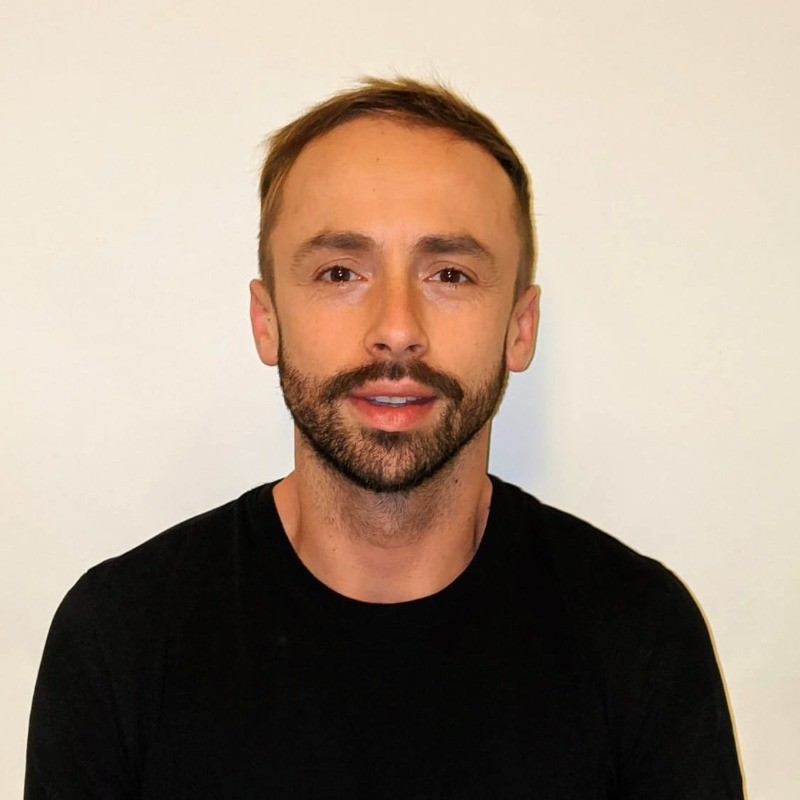
Nerkez Opacin
Dr. Nerkez Opacin is a Senior Research Fellow in Nature and People at the University of Melbourne, where he investigates how nature-based interventions and community-led intiatives can enhance social connection, wellbeing, and resilience in societies affected by crises.
His research combines social psychology, anthropology, peacebuilding, environmental health, and participatory action research. His work often centres on young people, marginalised communities, and the everyday spaces where change quietly begins — through dialogue, shared experiences in nature, and encounters across social and cultural boundaries.
Nerkez has conducted extensive multi-sited ethnographic fieldwork across Southeast Europe and Australia. He currently co-leads several nature-based social prescribing projects, including the EU-funded RECETAS initiative in Melbourne. His research has been published in international journals, such as the International Journal of Educational Development, Wellbeing, Space & Society, and the British Journal of Social Psychology.
Nerkez is committed to making research accessible and practical for communities, practitioners, and policymakers. His work consistently highlights the voices of those who are one unheard, demonstrating how small human interactions can create opportunities for belonging, healing, and peace. https://www.linkedin.com/in/nerkezopacin/