

For over a decade, Mali has been caught in a complex conflict that began with a separatist rebellion in 2012 in the north and soon expanded into a multifaceted war involving jihadist groups, community militias, and international forces. Despite multiple peace agreements and foreign interventions, violence has persisted and spread across the Sahel, displacing nearly 4 million people as of October 2025, and eroding trust in both domestic and external actors.
Between May and June 2025, when people in Mali were asked which foreign actor they would support most to bring security to their country, many surprised observers by choosing Russia over the United Nations or France. In a place that has seen a decade of foreign military involvement — from UN peacekeepers to regional coalitions and private security companies — one might expect international organizations to inspire more confidence. But recent research found the opposite.
During this time, a team of researchers from the Universities of Florence, Naples, and Bologna (Italy) organized a survey with more than 1,500 respondents in Mali’s Gao and Mopti regions, both deeply affected by conflict and external interventions. We asked respondents how much they would support a military intervention led by different actors: the UN, ECOWAS, France, or Russia. Then we varied two conditions — whether the mission was effective in reducing violence, and whether its troops acted with integrity or were involved in abuses.
The results were striking. Malians generally support foreign interventions to improve security, but their preferences depend on who intervenes and how those actors behave. Contrary to long-held assumptions, individual states received higher support than international organizations, and non-Western powers were seen more favorably than Western ones. But most importantly, support increased sharply when people perceived that the mission was effective — and collapsed when they believed foreign soldiers had engaged in misconduct, such as abuse or corruption.
Beyond the “Supply Side” of Peacebuilding
For decades, peacekeeping research and policy have focused on the “supply side” of what international actors do: the number of troops, the strength of mandates, or the robustness of operations. This perspective assumes that legitimacy flows from institutions — from the UN flag, the Security Council mandate, or the moral authority of multilateralism.
But as Mali shows, legitimacy is not something that interveners can simply claim; it must be earned from below. People living amid violence judge foreign missions not by their mandates, but by their conduct, performance, and respect for local communities. In other words, peacebuilding depends less on external structures and more on relationships of trust.
In Mali, the UN’s Multidimensional Integrated Stabilization Mission (MINUSMA) once enjoyed broad support. Yet over time, frustration grew as civilians continued to suffer from insecurity and abuses by several armed groups. Violence against civilians by Islamist factions, sexual exploitation of women, and forced recruitment of children have now become recurring phenomena that have plagued the country for years. By 2023, only 23 percent of Malians expressed satisfaction with the mission — a dramatic drop from 50 percent in 2014. When the government demanded MINUSMA’s withdrawal, public opinion largely backed the decision.
This erosion of confidence is not unique to Mali. Despite average good performances, across conflict zones, people’s trust in international peace operations has been shaken by unfulfilled promises, slow responses, and, at times, serious misconduct. When missions fail to protect civilians or appear disconnected from local realities, their symbolic legitimacy fades.
Listening as a Peace Strategy
The lesson is simple but often ignored: peace cannot be delivered without listening. Local people are not passive recipients of peacebuilding efforts — they are active judges of their fairness, competence, and sincerity.
Our study shows that local populations support international interventions with varying degrees of persuasion depending on who is involved. In Mali and much of the Sahel, Western interventions are often viewed through a colonial lens. For many communities, the rhetoric of “liberal peace” sounds hollow and false when it comes from powers that have exploited African countries for decades and mostly conceived peacekeeping operations with a top-down approach. Non-Western actors, on the contrary, may gain sympathy not necessarily because they perform better, but because they appear to offer an alternative to what is seen as a failed model of external control. Nonetheless, our findings reveal that the effectiveness of international interventions and their integrity matter as much as the identity of interveners to enjoy the support of local populations. Even actors with low reputational status can earn support if they deliver real security and act ethically. Conversely, misconduct or arrogance can destroy legitimacy, even for organizations that claim universal values.
This insight points to a broader truth: Peacebuilding is not just about stopping violence; it is about building relationships of accountability between local populations and external actors. That means designing interventions with local participation from the start — not as a box to tick, but as a genuine exchange of perspectives and priorities.
From Intervention to Partnership
If peacebuilders want to regain trust, they must move from intervention to partnership. That means shifting the approach: from “helping” to “cooperating,” from “teaching” to “listening.” International organizations and donor states need to see local legitimacy not as a secondary concern, but as the foundation of success.
Practical steps include supporting community-based peace initiatives, strengthening local institutions of justice and mediation, and ensuring that peacekeeping missions are accountable to the populations they claim to protect. Transparency about failures and abuses is equally crucial. As our data show, once integrity is lost, no amount of effectiveness can fully repair the damage.
Moreover, international organizations such as the UN and Western powers need to realize that the undergoing change in the international system has tangible consequences. As global competition intensifies — with new actors like Russia, Turkey, China entering the field — despite current events involving some of these actors, the old assumption that legitimacy amongst populations in conflict zones automatically belongs to Western-led institutions no longer holds. The future of peacebuilding will depend on how well international actors learn to share power, credit, and voice with those on the ground.
In the end, what Mali teaches us is not a rejection of peace efforts, but a demand for relevance. People’s responses remind us that for peacebuilding to really succeed, it must be rooted in local consent and mutual understanding, not external assumptions.
Keywords: Malians, Mali, Africa, peacebuilding, peacekeeping, UN peacekeepers, peace, conflict, conflict resolution, foreign intervention

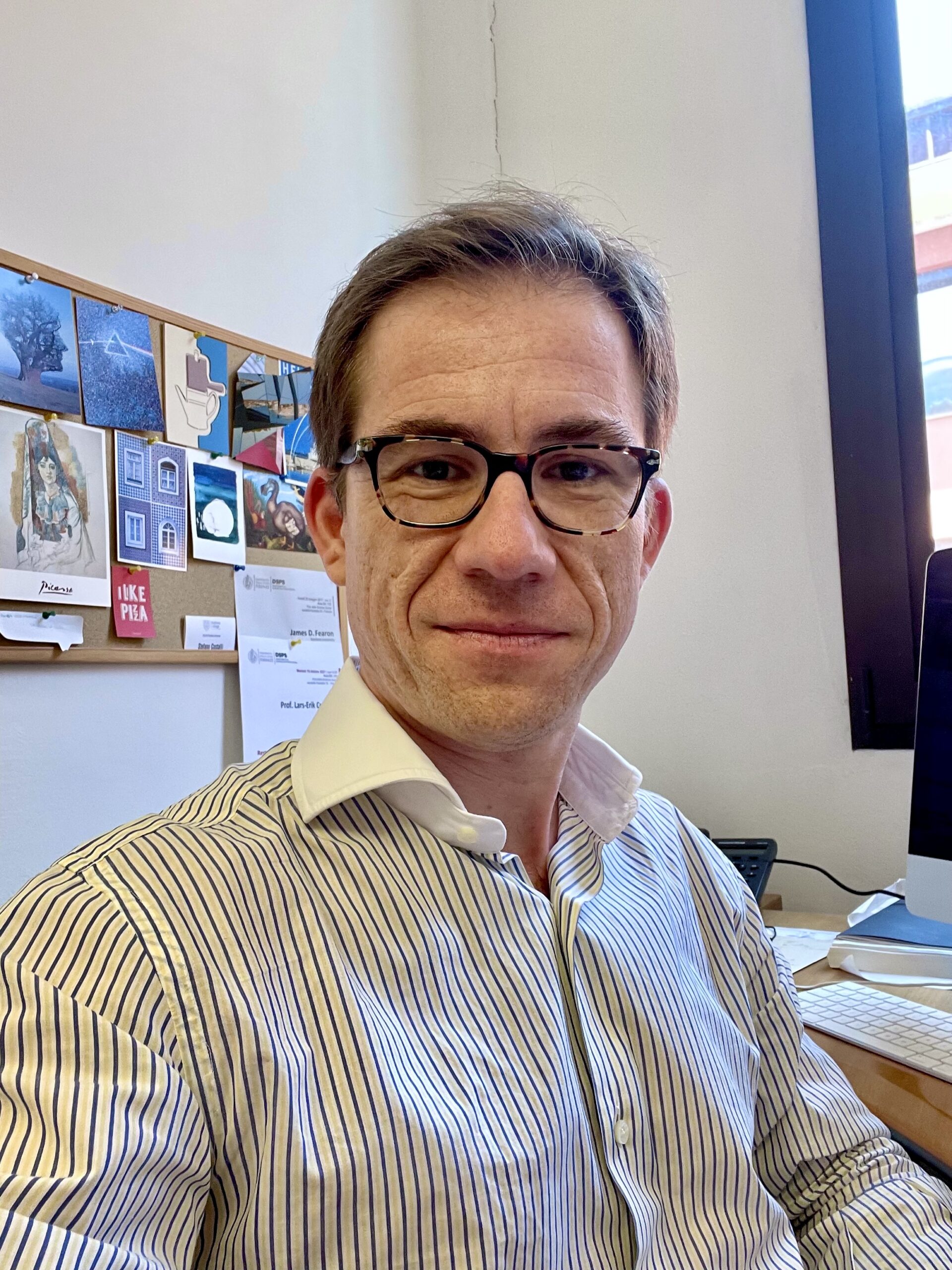
Stefano Costalli
Stefano Costalliis Full Professor of Political Science at the Department of Political and Social Sciences of the University of Florence. Prior to joining the University of Florence, he worked at the Catholic University of Milan and the Department of Government at the University of Essex, where he is still a Research Fellow at the Michael Nicholson Centre for Conflict and Cooperation. He has also been a Visiting Research Fellow at the University of Amsterdam and the University of Oxford.
His research interests include civil wars, political violence, peacekeeping, democratization processes, ethnic conflicts, long-term consequences of armed conflict and authoritarianism, political realism, and quantitative methods for political research. His studies have been published in international scientific journals such as British Journal of Political Science, Comparative Political Studies, International Security, Journal of Peace Research, Political Geography, World Politics.
He has been Associate Editor (2018-2022) and is still a member of the Editorial Board of Political Geography. He is also a member of the Editorial Board of Conflict Management and Peace Science.