

The editors of Relational peace practices (Anna Jarstad, Johanna Söderstrom, and Malin Åkebo, 2023) have developed a new approach to defining opportunities for peace. The book, a collection of in-depth case studies by several academics, focuses on peace within social dyads, groups of two people have a relationship to one another.
Relational peace, the editors write, entails “behavioral interaction that can be characterized as deliberation, non-domination, and cooperation between the actors in the dyad” (Söderstrom et.al. 2021). Each of the chapters provide rich depictions of the lived experience of people in countries experiencing conflict such as Cyprus, Colombia, Russia, Cambodia, South Africa, Myanmar, the Philippines, and Sri Lanka.
The point of the book is to apply this conceptual framework to cases across the world, thereby illustrating specific components of these dyads, as well as the different forms they can take. Examples include dyads between elites, ethnic groups, civilian and military actors, and artistic groups.
The book shows how these dyads may have a demonstration effect over the rest of society, creating pressure towards peaceful relations. In this way, the chapters included in the book introduce much needed nuance and an understanding of process into our knowledge about how societies become peaceful (or, in contrast, relapse into violence).
This is useful to manage expectations: In order to produce incremental advances towards peace, specific dyads—not necessarily the whole of society, and not even a majority—can contribute to building the kinds of relationships that will prevent new bouts of violence. This represents a clear departure from the positive/negative peace dichotomy and illustrates the importance of agency over structure. The book accomplishes its goals by underscoring the practical implications of the relational peace approach for research and methodology choices, as well as for the formulation of public policy.
While the focus on relations between groups is fruitful, the analysis leaves open several questions the reader or the researchers may want to address. One refers to the larger context in which dyads develop relations, and the centrality of each dyad to building sustainable peace. In this regard, the book does not provide an in-depth exploration of which kinds of dyads are more strategic or central to the overarching goal of achieving sustainable peace. A crucial missing ingredient is therefore the old question of power and influence: not any dyad will produce a wide-ranging effect, some dyads may prove to be more consequential and more impactful than others, and should therefore be the target of policy intervention and promotion.
An additional question relates to the emergence of non-obvious, even surprising dyads, such as between victims and perpetrators. When the harmed and the causers of harm come together and develop constructive relations, they may form unexpected alliances to move forward the peace. The chapters by Manuela Nilsson on Colombia and by Niklas Eklund on Russia point in this direction. What are the conditions for these unusual dyads to develop and consolidate and what effect do they have on the larger society?
A third question relates to how many non-peaceful dyads a society can endure until peace breaks down. What do we know about resilience resulting from the “right” mix of dyads and component actors or, in contrast, about the vulnerabilities arising from negative dyads which will propel societies back into violence?
A final question is about the complex system dyads operate in. As covered, for example, by the chapter by Isabel Bramsen on the role of actors external to the dyad, there is by now a vast literature on the negative or constructive role of third parties in conflict, peacebuilding, and transitional justice. What can be said about the efforts to promote dyads via the facilitation or enabling role of external actors and organizations? Under what conditions are they and aren’t they be effective?
The book and the framework provide rich stimulus to address these questions. Readers will find a highly stimulating set of case studies, all tied together nicely with dense introductory and concluding remarks.
Keywords: relational peace, book review, dyads, social dyads, peace relations, conflict zones, peace, conflict, conflict resolution, relationships

Angelika Rettberg
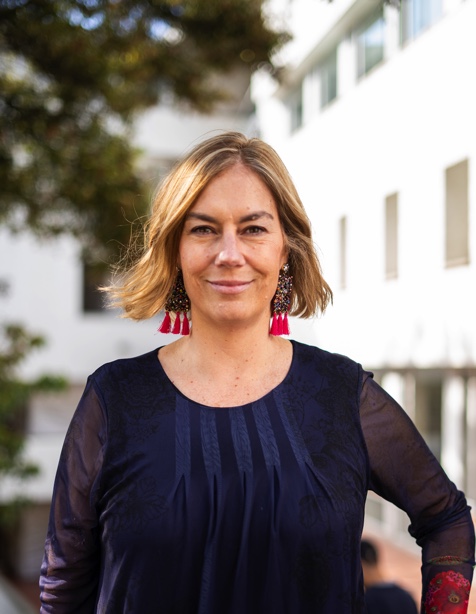
Angelika Rettberg is a professor at the Political Science Department and the Dean of School of Social Sciences at Universidad de los Andes (Bogotá – Colombia). She is also an Associate Researcher at the German Institute for Global and Area Studies (GIGA) and a Global Fellow at the Peace Research Institute of Oslo (PRIO). In 2018 she served as a negotiator for the Colombian government in the peace talks with the Ejército de Liberación Nacional (ELN). Her research has focused on several aspects of the political economy of armed conflict and peacebuilding, such as the relationship between legal resources, armed conflict, and criminality in several Colombian regions, the dynamics of transitional justice, and business behavior in contexts of armed conflict and peacebuilding. She serves as co-editor-in-chief of World Development journal.