


In Nilphamari, Bangladesh, farmer Sabuj Mia watches the Teesta river shrink a little more each dry season. He grows maize and mustard along the riverbank his family has farmed for generations, and he now fears that if the water keeps disappearing, neither crops nor fish will survive it (ICSF). A few hundred kilometers upstream, across an international border, Indian farmer Gopal Sarkar in Jalpaiguri district faces the opposite extreme: a meter of silt and sand dumped across his one-hectare vegetable plot by floodwaters that swept down from Sikkim, burying land that around 200 farmers depend on near the Gajoldoba barrage (Mongabay-India, 2024). Same river, same shifting climate, two agrarian worlds separated by a border neither man drew.
From an anthropological perspective, this is not simply a diplomatic failure story, it is a story about how a state border reorganizes an agrarian region that was, and in many everyday senses still is, ecologically and culturally continuous. Anthropologist Willem van Schendel’s foundational study of the region describes the India-Bangladesh boundary as a “patchwork border” that cuts through kinship networks, markets, and shared ecological cycles without erasing them (van Schendel, 2005). More recent ethnographic work by Sahana Ghosh, based on a decade of fieldwork in precisely this borderland, documents how militarized bordering has devalued agrarian land, crops, and rural livelihoods on both sides even as informal social ties persist (Ghosh, 2023).
The Teesta dispute sits inside exactly this borderland social fabric. The Teesta, rising in Sikkim’s glaciers and running 414 kilometres into Bangladesh’s Jamuna, has been the subject of stalled bilateral negotiations since the 1980s, with a 2011 draft agreement offering Bangladesh 37.5 percent and India 42.5 percent of dry-season flow still unratified after opposition from West Bengal’s state government (The Diplomat, 2026; Deccan Herald). The river’s floodplain supports roughly 14 percent of Bangladesh’s cropped area and around 9 million people directly (The Diplomat, 2026), while on the Indian side its waters irrigate paddy and vegetable farms across Jalpaiguri and Cooch Behar through the Gajoldoba-Mahananda canal system (The Business Standard, 2026).
For farmers, the dispute is lived through the agrarian calendar, not debated in the abstract. In Bangladesh’s Rangpur division, roughly 100,000 hectares are now unsuitable for winter cultivation because of reduced dry-season flow (Prothom Alo, 2026), and dry-season discharge that should exceed 4,500 cusecs has at times fallen to little more than 500 cusecs (Dialogue Earth, 2014). An estimated 60 to 70 percent of farmers now depend on costly diesel pumps rather than canal water (The Climate Watch, 2026), while a 2022 survey of 276 farmers across Lalmonirhat, Rangpur and Nilphamari found that flooding, hailstorms, and cold waves were already damaging Aman rice, jute and Rabi crops, with specific losses documented village by village (Islam et al., 2022). On the Indian side, October 2025 floods linked to Bhutanese rainfall and dam issues displaced roughly 200 families in Jalpaiguri (Down To Earth, 2025), while West Bengal officials have repeatedly cited their own farmers’ irrigation needs worsened, they argue, by glacial retreat and erratic rainfall as grounds for resisting a treaty (Prothom Alo, 2026).
Climate change threads through the entire agrarian system rather than sitting apart from it. Scientists warn that if warming exceeds 1.5°C, up to two-thirds of the high-mountain glaciers feeding Himalayan rivers like the Teesta could disappear by century’s end (Down To Earth, 2025), a trend already implicated in the river’s volatile flow and the 2023 glacial lake outburst that destroyed the Teesta-III dam (The Diplomat, 2026). Farmers on both banks are, in effect, adapting to the same destabilized resource system, developing local ecological knowledge about sowing timing, alternative crops such as maize and tobacco, or diesel-pump irrigation independently of, and often faster than, formal policy (ResearchGate, 2025 repost).
This raises the question at the heart of the story: Are farmers, activists, or civil-society actors building their own informal channels: oral, digital, or through periodic market and kinship contact to share flood warnings, irrigation knowledge, or climate-adapted farming practices across a border their governments have not resolved? Some academic proposals call for precisely this: a 2025 study recommends establishing cross-border community forums involving farmers and fishers near the Siliguri corridor (Rahman & Karim, 2025), and water-diplomacy analysts have floated “regional water committees” as part of a multi-track approach (The Water Diplomat, 2025). These remain proposals, not documented realities, this reporting treats any “People’s Water Committee” strictly as a hypothesis to test in the field, never as an established fact.
There is a genuine comparative precedent worth investigating, not assuming: Research on grassroots environmental peacebuilding across this same India-Bangladesh border has documented community-level ecological cooperation around the Sundarbans, suggesting shared environmental stress can, under some conditions, generate people-to-people contact even amid political deadlock (Huda, 2021; Dresse et al., 2019). Whether anything comparable exists on the Teesta carried through the borderland’s existing informal networks, as documented by Ghosh (2023) and van Schendel (2005) is exactly what fieldwork would need to establish.
Researchers should investigate by interviewing farmers in Nilphamari and Rangpur and in Jalpaiguri and Cooch Behar, local environmental activists, river researchers, agricultural extension officers, and for institutional contrast Joint Rivers Commission officials. It would weigh real benefits (shared flood and drought information could reduce mutual suspicion and complement, not replace, stalled state negotiations, as the 2022 Kushiyara agreement shows is achievable; (The Water Diplomat, 2025) against genuine limits: India alone measures and controls upstream data and infrastructure (South Asia Times, 2025), cross-border organizing near a security-sensitive corridor carries real risk for borderland residents (Ghosh, 2023), and no farmer-level dialogue can substitute for a binding state allocation treaty.
The story matters now because the 1996 Ganges Treaty expires in December 2026, intensifying scrutiny of every shared river between the two countries (The Business Standard, 2026), even as West Bengal’s political landscape shifts and Bangladesh explores new infrastructure partnerships (The Diplomat, 2026).
Keywords: India, Bangladesh, Teesta, river, rivers, climate change, peace, conflict, conflict resolution, peacebuilding, environmental peacebuilding

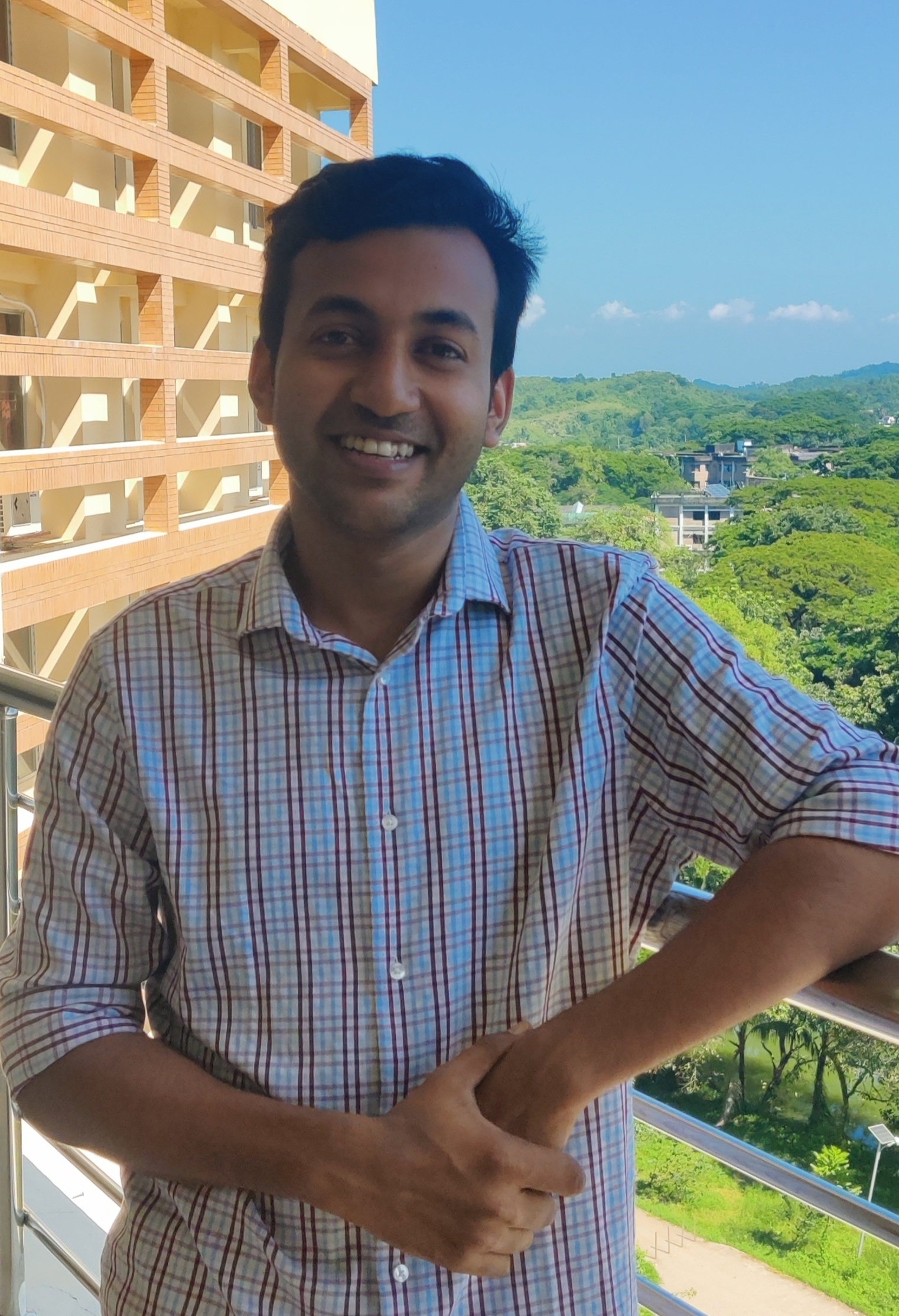
Md. Masum Billah is a Lecturer in the department of anthropology at Shahjalal University of
Science and Technology (SUST), Sylhet, Bangladesh, where he has served since October 2025.
He holds both a Bachelor of Social Science (2016–2020) and a Master of Social Science
(2021–2022) in Anthropology from SUST, and was awarded the Peter Haore & Mushtaq
Rahman Scholarship by the department in 2021.
Before joining the faculty, he worked as a Research Assistant in SUST's Department of
Architecture (2024–2025), and earlier completed an internship with Friends in Village
Development Bangladesh (FIVDB) in 2020, gaining exposure to community-oriented
development work.
His academic and research interests span several applied areas of anthropology, including public
health and medical anthropology, business anthropology, climate change and environment,
indigenous and marginalized community issues, migration and diaspora, political anthropology,
and visual media and culture. At SUST, he teaches courses such as Fundamentals of
Anthropology, Migration and Diaspora, Political Anthropology, and Visual Media&Culture,
reflecting this broad range of interests.