

Peacebuilders across Nigeria, Ghana, and South Africa are calling for stronger cross-border peacebuilding mechanisms, community dialogue, and early-warning systems to prevent xenophobic tensions in some African countries from triggering retaliatory violence against innocent people and businesses across borders.
They warned that anger over attacks on migrants in one country could quickly spread through social media and community networks, creating fear, misinformation, and calls for revenge that could put foreign nationals at risk elsewhere.
This comes amid anti-immigration protests and attacks in South Africa in recent months. Since April 2026, anti-immigrant groups have staged protests and demanded that undocumented foreigners leave the country, with violence, intimidation, looting and attacks on foreign-owned businesses reported in several cities. The violence has affected people from countries including Nigeria, Ghana, Malawi, and Zimbabwe.
Rather than allowing anger to develop into collective blame, peacebuilding actors said governments, traditional and religious leaders, civil society organisations, the media, and communities must work together to prevent escalation and create channels through which grievances can be addressed peacefully.
South African politician and human rights activist Julius Malema, despite being known as a polarizing figure, has spoken against xenophobia, warning that hatred directed at foreigners can deepen divisions within society.
“I’m not going to join anyone who beats up African persons, I’m not part of this mess,” he said in a video shared on social media. He further added that even if foreigners are deported, “poverty will remain, hunger will remain, the inequality will remain.”
For peacebuilders, such messages are important because preventing retaliation requires addressing emotions before they turn into organized violence. For example, in 2019, there were reprisal attacks on South Africans in Nigeria following xenophobic attacks in South Africa. Nigerian peace activist and convener of the Interfaith Media Centre, Sansom Auta, told Peace News Network (PNN) that inflammatory incidents abroad could rapidly mobilize angry young people online and offline.
He said peacebuilders should use Early Warning and Early Response (EWER) mechanisms, community dialogue, and constructive media engagement to ensure that public anger is channelled towards peaceful and diplomatic solutions. “When inflammatory incidents occur abroad, volatile rhetoric can rapidly mobilize aggrieved youth online and offline,” Auta said.
He urged peace networks to monitor social media for inflammatory disinformation, manipulated content, and calls for reprisal attacks, adding that such material should be identified and countered before online hostility translates into physical violence.
Auta also called for direct engagement with youth groups, community leaders, women’s organizations, and market associations in areas where migrant populations are significant. According to him, early engagement can ensure that communities have organized channels for expressing grievances instead of resorting to mob action.
He further advocated the use of Alternative Dispute Resolution (ADR), saying rapid-response dialogue platforms involving migrant communities, host communities, and security agencies could help protect lives and businesses when tensions rise.
“Peace message should be the watchword of every citizen and for all Africans,” Auta said, stressing that justice cannot be achieved by harming innocent people because of grievances committed elsewhere.
In Ghana, the National Peace Council is similarly advocating an early-warning and coordinated peace information approach. Kwesi Yirenkyi Boateng, head of the Public Relations Unit of the National Peace Council in Accra, told PNN that anger over incidents abroad should not become a reason to attack people at home. For example, he said, a South African living peacefully in Ghana should not be held responsible for the actions of people elsewhere, just as Ghanaians living abroad should not be collectively blamed for the actions of individuals in Ghana. “Anger over what happened abroad must not become harm to people at home who had no part in it,” he said.
He said the Council recommends closer monitoring of threats, hate speech, and calls for reprisal, particularly in communities with significant foreign populations.
Boateng also emphasized the importance of speed in responding to rumours. “Correcting a rumour early is far easier than repairing relationships after it has hardened into hostility,” he said.
He called for credible and timely information from government and security agencies, verification by the media, engagement with migrant representatives and diplomatic missions, and sustained support for people returning from affected areas.
He also urged citizens who encounter threats to report them to authorities rather than taking the law into their own hands. “We understand the anger, but revenge is not justice,” Boateng said.
For peacebuilding actors, preventing retaliation therefore requires challenging the logic of collective blame.
Sharon Ekambaram, one of the founders and spokesperson of Kopanang Africa Against Xenophobia (KAAX) in South Africa, told PNN that the organization’s community-level work focuses on building solidarity across nationality, race, gender and social class.

She said the organization works to address the vulnerabilities that can fuel hostility towards migrants, including poverty, unemployment, and inadequate basic services.
“Vulnerability in South Africa is not because of the migrants,” Ekambaram said, stressing the need to organize communities around the underlying social and economic challenges affecting both migrants and South Africans.
She said community solidarity becomes particularly important when tensions rise, noting that South Africans have responded to humanitarian needs by providing food, medical assistance, hygiene supplies and other support to affected migrants.
Ekambaram also highlighted the role of the media in preventing escalation, urging journalists to avoid sensational reporting that could inflame already tense situations.
For her, peacebuilding must go beyond responding to individual attacks. It should involve sustained community organization, human-rights protection, dialogue and efforts to address structural grievances that create fertile ground for scapegoating.
Peacebuilders also stressed the importance of cross-border cooperation. Civil society organizations in Nigeria, Ghana and South Africa can establish communication networks that allow them to exchange early-warning information, respond jointly to misinformation, and mobilize peaceful voices whenever tensions emerge.
Traditional and religious leaders can use their influence to discourage collective blame, while youth organizations can challenge inflammatory narratives online and promote dialogue.
The media, meanwhile, can play a preventive role by verifying information, providing context, and avoiding language that portrays the actions of individuals as the character of an entire country or nationality.
Boateng said the long-term response should include sustained dialogue between migrant and host communities, responsible migration governance, public education, economic inclusion and accountability for perpetrators of violence.
He also encouraged Ghana and South Africa to maintain diplomatic channels and use regional platforms, including the African Union, to pursue shared solutions.
For Ekambaram, building solidarity beyond national borders is central to preventing retaliation. She said Africans facing economic and social vulnerabilities should not be divided along nationality lines, arguing that communities are better protected when they work together to demand peaceful and accountable responses to their problems.
The emerging message from peacebuilders is therefore clear: xenophobia cannot be countered effectively by another form of xenophobia.
The immediate task is to prevent fear and anger from becoming violence. The longer-term task is to strengthen relationships between host and migrant communities, address misinformation, establish functioning early-warning mechanisms and ensure that grievances have peaceful channels for resolution.
The challenge is not simply to condemn violence after it occurs, but to build communities capable of recognising warning signs, resisting manipulation and responding to grievances without targeting innocent people.
Keywords: Africa, South Africa, Nigeria, Ghana, xenophobia, peace, conflict, conflict resolution, migrants, migration, immigration, anti-immigration, riots, protests, African

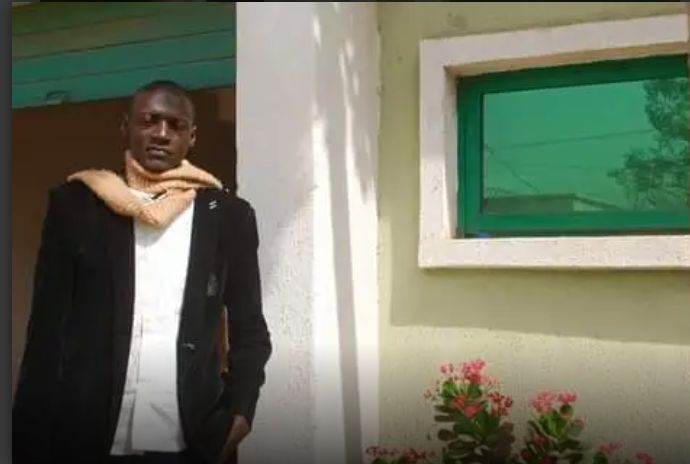
Mohammed is a multimedia freelance journalist in Kaduna State, Nigeria. He graduated from the International Institute of Journalism Abuja. In 2016 Mohammed received the Courage in Journalism Award for his investigative reporting, from the Africa Media Development Foundation.