


How can filmmaking help Colombian children tell their stories? How can storytelling help Colombian children and communities heal during conflict?
Belén de los Andaquíes, a small municipality in Colombia’s southern department of Caquetá, is the kind of place often described from the outside through the language of war. For decades, Caquetá was shaped by the presence of guerrilla, paramilitary and criminal armed groups, as well as forced displacement, disappearances and fear. But in one corner of the town, children and young people have been learning to look at their territory differently. Before they pick up a camera, they are asked a simple question: What story do you want to tell?
That question is at the heart of the Escuela Audiovisual Infantil, the Children’s Audiovisual School, founded by community communicator Alirio González after years of work with Radio Andaquí, a local community radio initiative that began in the 1990s. The school’s motto, ‘Sin historia no hay cámara’ (‘No story, no camera’), is more than a teaching method. It is a quiet peacebuilding practice in a region where armed actors have too often tried to impose fear as the only public narrative.
The timing matters. In February 2026, UNICEF warned that child recruitment and use by armed groups in Colombia had quadrupled over the last five years, with one child recruited or used every 20 hours according to UN-verified figures. The same warning pointed to poverty, lack of education, weak services and rural isolation as factors that leave children exposed to violence. This is the wider backdrop against which the work of community projects such as the Escuela Audiovisual Infantil should be understood: not as a romantic alternative to protection, but as one part of the social fabric that helps children imagine futures away from armed life.
The school is different from other youth journalism projects in Colombia because it did not begin as a national programme or a response campaign. It grew slowly from a local culture of communication. Radio Andaquí first provided a space where neighbours could hear each other, share local information and resist the idea that the only news worth telling was about death, armed confrontation or political polarisation. Later, the audiovisual school took that civic impulse into the hands of children. A donated camera was enough to begin. Children filmed markets, rivers, kitchens, neighbourhood conversations, animals, festivals, jokes and family memories.

The point was not to deny the violence around them, but to refuse to let violence become the only way Belén de los Andaquíes could be seen. This matters because war damages more than bodies and buildings. It damages trust. It narrows the imagination. It can make children feel that their town is only a place to leave, fear, or survive. The Escuela Audiovisual Infantil works in the opposite direction. It invites young people to observe, listen and ask questions. It turns local knowledge into something valuable. It gives public meaning to the voices of children, parents, teachers, farmers and neighbours who rarely appear in national media except as victims.
Its work has also reached Colombia’s official memory process. The project ‘Historias de adultos narradas por niños’ (‘Adult stories narrated by children’) was developed with the Colombian Truth Commission’s artistic and cultural strategy. Children from Belén de los Andaquíes and nearby rural communities received memories of colonization, armed conflict, displacement, and the struggle to build a dignified life in Caquetá, then turned them into drawings and animations. This was not conventional testimony. It was intergenerational listening: Adults entrusted memories to children, and children returned those memories to the public through art.
The school’s achievements are real. Its productions have gained national recognition, including awards for community television. Former participants have gone on to study visual arts, media and communication. Parents and teachers describe children becoming more confident, more willing to speak in public and more attached to their municipality. Every screening also becomes a small civic event: a chance for neighbours to see themselves on screen not as a problem, but as a community with humour, history and dignity.

Yet the story should not be told as if cameras alone can defeat war. The school faces the same difficulties that affect many grassroots peace initiatives: unstable funding, limited equipment, dependence on voluntary labor and the constant need to reach children in rural areas where transport, internet and public services are uneven. It also has to navigate the risks of working in a territory where armed violence has not fully disappeared. Its careful focus on everyday life, memory, culture and nature is not an escape from politics; It is a way of keeping civic expression alive without exposing children or families to unnecessary danger.
That balance is one of the lessons the Escuela Audiovisual Infantil offers to peacebuilders elsewhere. Peace is not only made in negotiations between governments and armed actors, important as those may be. It is also made in ordinary civic practices: in a child asking an elder about the river; in a group of friends learning to edit a film; in a family watching its own story projected back with care; in a community deciding that it has the right to narrate itself.
In peace journalism, the challenge is not only to report violence, but to notice the people and practices that reduce its power over daily life. The Escuela Audiovisual Infantil does not present Belén de los Andaquíes as a perfect island untouched by conflict. It shows something more modest and perhaps more hopeful: even in places marked by fear, people can create spaces where children are recognised as storytellers, neighbours see each other again, and memory becomes a shared resource rather than a wound carried alone.

‘No story, no camera’ sounds like a rule for making films. In Belén de los Andaquíes, it has become a lesson in peace. Before a camera records a place, a child must first discover that the place has stories worth telling. And when a community learns to see itself through those stories, it also begins to protect the possibility of a different future.
Keywords: Colombia, film, journalism, youth, media, peace, conflict, conflict resolution, video, storytelling, camera

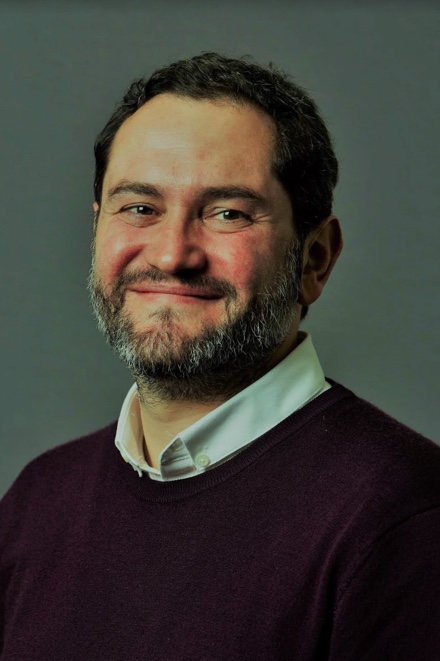
Camilo Tamayo Gómezis aSenior Lecturer at the University of Huddersfield (UK). He is a Senior Adviser in Transitional Justice for the United Nations Development Programme (UNDP).