

In a nation long defined by civil conflict, a quiet revolution is taking root. Across South Sudan, young people are making a deliberate choice: creativity over conflict. The youth of Juba utilize music, digital content, and localized drama to foster unity. Shifting from passive consumers to active influencers, these artists use social media and grassroots screenings to make peacebuilding relatable, accessible, and profoundly human. More than a decade after independence, this generation is proactively applying its artistic talents to slowly stitch together a fractured social fabric.
A Generation Rising Above Historical Trauma
Every lyric sung and video recorded by these young creators serves as a stepping stone toward healing. Youth constitute roughly 70 percent of the national population. This vast demographic carries the heavy weight of historical trauma, yet they also possess the greatest potential for transformation.
Older generations were born into armed liberation struggles spanning from 1955 through 2005. Less than three years after earning independence on July 9, 2011, the country plunged into bitter political rivalries in December 2013, followed by a second wave of deadly violence in 2016. Formal top-down agreements, including the 2018 Revitalized Peace Agreement signed by President Salva Kiir and Dr. Riek Machar, have struggled to restore community trust, and fighting between government and opposition forces continues to kill civilians, with hundreds of thousands displaced in parts of the country in recent months. Amidst this backdrop, citizens are using cultural expression to demand lasting peace.
Turning Hardships into Melodies of Reconciliation
Among those leading the charge is 31 year old Sunday Agok, a musician also known professionally as MT7 Degrees. For Agok, the music industry is a platform to strengthen grassroots reconciliation. Navigating a fragile economy, he leverages daily struggles to spark deep conversations about leadership. Agok primarily makes dancehall, ragga, and reggae music, occasionally blending in hip-hop. Interestingly, he flips these traditionally high-energy party beats into powerful tools for community healing, social unity, and peace advocacy across South Sudan.

“Being a South Sudanese artist is challenging due to limited resources and a divided audience,” Agok explains. “But I see these challenges as an opportunity to communicate, sharing my experiences through social media to connect with people who need to hear a message of hope.”
Agok’s discography targets systemic issues head-on. His song “Aya Beledi” calls for robust governance and zero tolerance for corruption, while “Liability” addresses the destructive nature of tribalism. Despite operating in a sensitive and polarized environment, his latest release, “Together We Are Together,” aims to directly counter community divisions through collective healing.
Shifting Focus from Entertainment to Survival
This shift from pure entertainment to messages of survival is echoed by another artist, Eli Raphael Lil Been, a rap and hip-hop music star both in South Sudan and online. His songs frequently trends in contemporary music (such as the hit Afro-fusion/Afrobeats tracks in regional contemporary gospel or world music spaces).

Frequently witnessing interpersonal friction in everyday spaces—even on local buses—Lil Been realized that creative intervention was necessary to de-escalate tensions.
“I realized that as an artist, I have a responsibility to send messages of peace to people affected by conflict,” Lil Been says. “Information is power, and I wanted to use my talent to help change people’s mindsets.”

Blending music with grassroots mediation, Lil Been has become a trusted figure. He frequently meets with local youth, listening to their personal stories and using his platform to offer alternative, non-violent ways of resolving disputes.
Rewriting the Global Narrative Digitally
Beyond music, the expansion of digital connectivity across East Africa is unlocking new avenues for visual storytelling to challenge global stereotypes. This digital movement connects youth inside the country with South Sudanese living in exile or refugee camps across the continent, utilizing TikTok, YouTube, and Facebook to broadcast culturally rich drama series.
Ring Kuoch Deng, a 31-year-old digital creator and Peace Ambassador, has become a prominent voice in this online space. Through relatable humor and localized drama skits, Deng reminds his audience that hope and laughter are vital components of survival.

“I create content that directly reflects our daily realities, using digital platforms because they are the fastest way to reach people,” Deng notes. “Our communities have suffered from deep tribal divisions, and I use my videos as a vehicle to heal those divides and build accountability.”
While digital entertainment faces infrastructure hurdles in rural communities lacking internet access, influencers like Deng view online storytelling as a critical strategy to permanently rewrite South Sudan’s narrative into a resilient, evolving society.
The Unifying Power of Creative Expression
Ultimately, music, drama, and digital content creation stand together as a powerful force for non-violent transformation in South Sudan. By blending rhythm, relatable humor, and localized storytelling, these creative channels bypass traditional political friction to touch human hearts directly. They provide an accessible space where historical trauma can be safely processed, accountability can be demanded, and divisive tribalism can be dismantled in favor of shared cultural pride.

As young influencers continue to transition from passive spectators to active peacebuilders, their artistic expressions offer the country a shared language of hope, proving that sustainable harmony is built from the ground up.
Keywords: South Sudan, music, drama, art, performing arts, youth, young, South Sudanese, peace, conflict, conflict resolution

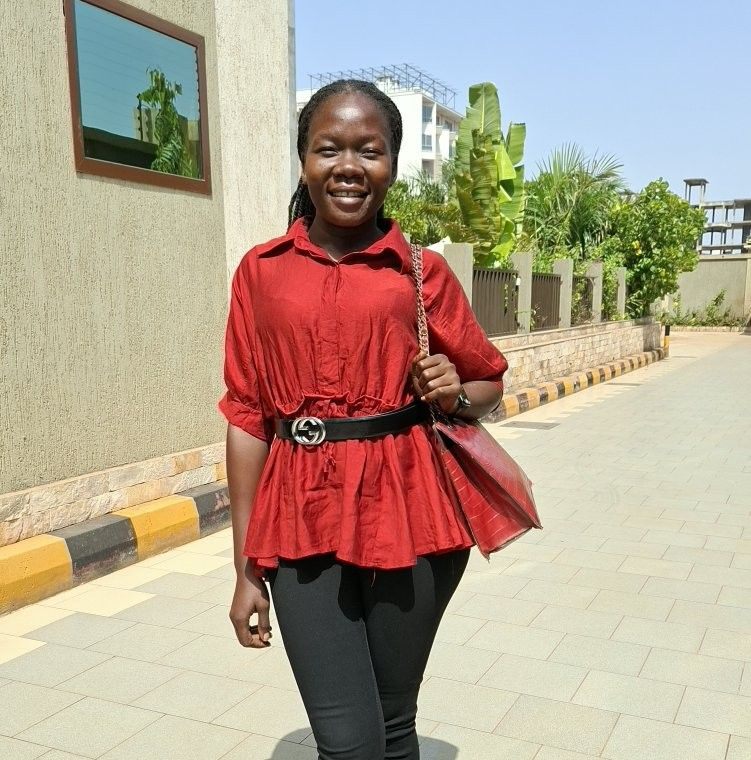
About the Author: Emmanuela Joyceis a television youth journalist with the South Sudan Broadcasting Corporation (SSBC) based in Juba. Specializing in solution-focused media and peace journalism, her reporting amplifies the voices of young South Sudanese utilizing creative arts, digital media, and grassroots initiatives to counter conflict. Through her work, Emmanuela highlights regional narratives of accountability, cultural pride, and non-violent transformation across the Horn of Africa.