

Since the collapse of the Soviet Union in 1991, Moldova has been faced with a protracted conflict with Transnistria, a region on the left bank of the Dniester River that remains outside the control of the central government. Despite the absence of active hostilities, this “frozen conflict” continues to impact society.
Moldovan youth are already actively involved in peacebuilding, but their contribution often goes unnoticed. While official and international structures focus on politics and strategies, young people on the ground create spaces for dialogue and trust. The main problem is that these valuable initiatives rarely extend beyond local projects and are hardly integrated into broader processes.
At the community level, youth projects are already demonstrating what practical peacebuilding can look like. A striking example is the art project “The Reflection of the Transnistrian Conflict in the Eyes of Youth through Street Art,” implemented by the Moldovan branch of the Romanian Center for European Politics in 2020. It brought together 20 young people from both banks of the Dniester River to reflect on the conflict through art.
Participants were able to reexamine their perceptions of each other: Young people from Transnistria dispelled the stereotype of themselves as “Bolsheviks” while their peers from the right bank were surprised to discover that many of their peers were fluent in Romanian. Such initiatives don’t just establish contact; they directly address the mistrust that underlies the conflict.
Similar processes are observed in other programs. For example, the “Wings for Youth of Moldova” initiative (Concordia) aims to improve access to education, employment, and housing for young people on both sides of the Dniester. The “Civic Engagement for Youth and Women’s Empowerment” program, launched by the National Youth Council of Moldova (CNTM) with support from the EU and Sweden, brings together young people and women from various regions, including Transnistria, engaging them in decision-making processes and public life.
The participation of partners from Tiraspol in this program is a rare example of institutionalized interaction. These examples clearly demonstrate that young people are capable of building dialogue where formal processes fail. However, their impact remains limited. Most such programs are perceived as part of social or humanitarian activities (education, employment, participation) and are rarely recognized for their contributions to peacebuilding. As a result, they do not receive adequate political attention and institutional support.
International programs complement these efforts, but often fail to address the problem systemically. Initiatives such as the Council of Europe’s Youth Peace Camp, the Organization for Security and Co-operation in Europe (OSCE) Model for Young People, and various training sessions on digital resilience and countering disinformation create valuable spaces for dialogue, learning, and exchange. They bring together young people from both banks of the Dniester River and beyond, equipping them with skills and new perspectives.
However, these initiatives are typically short-term, limited in scale, and rarely connected to national strategies or to one another. As a result, they create isolated opportunities rather than sustained pathways for youth participation in peacebuilding. The result is a fragmented system. Local initiatives build trust and social cohesion, but fail to scale. International programs provide opportunities but are not always integrated into the local context. State strategies, such as “Youth 2030,” launched in 2023, recognize the importance of youth participation but rarely highlight peacebuilding as a separate focus with clear tools and objectives.
Funding only exacerbates this gap. Youth organizations rely heavily on short-term project funding. Reduced support from USAID and other donors is already having a direct impact on their activities. Organizations are forced to scale back programs or completely rethink their work. Under these circumstances, it is difficult to talk about the long-term initiatives necessary for dialogue and reconciliation. The problem, therefore, is not a lack of activity or capacity. Young people in Moldova are building relationships, challenging stereotypes, and creating spaces for dialogue, often where formal processes fail.
Without institutional recognition, coordination, and sustained support, these efforts remain localized and fail to address the broader dynamics of the conflict. To change the situation, it is important to first recognize such initiatives as part of peacebuilding, not just social work. This requires integrating youth initiatives into national strategies, creating sustainable platforms for interregional dialogue, and building bridges across the local, national, and international levels.
Moldova’s youth possess enormous potential to build a peaceful and sustainable future. Recognizing their role and providing the necessary support will allow this potential to be fully realized, transforming local efforts into a meaningful contribution to national peacebuilding.
Keywords: Moldova, youth, peacebuilding, peace, conflict, conflict resolution, street art, state, support, Moldovan

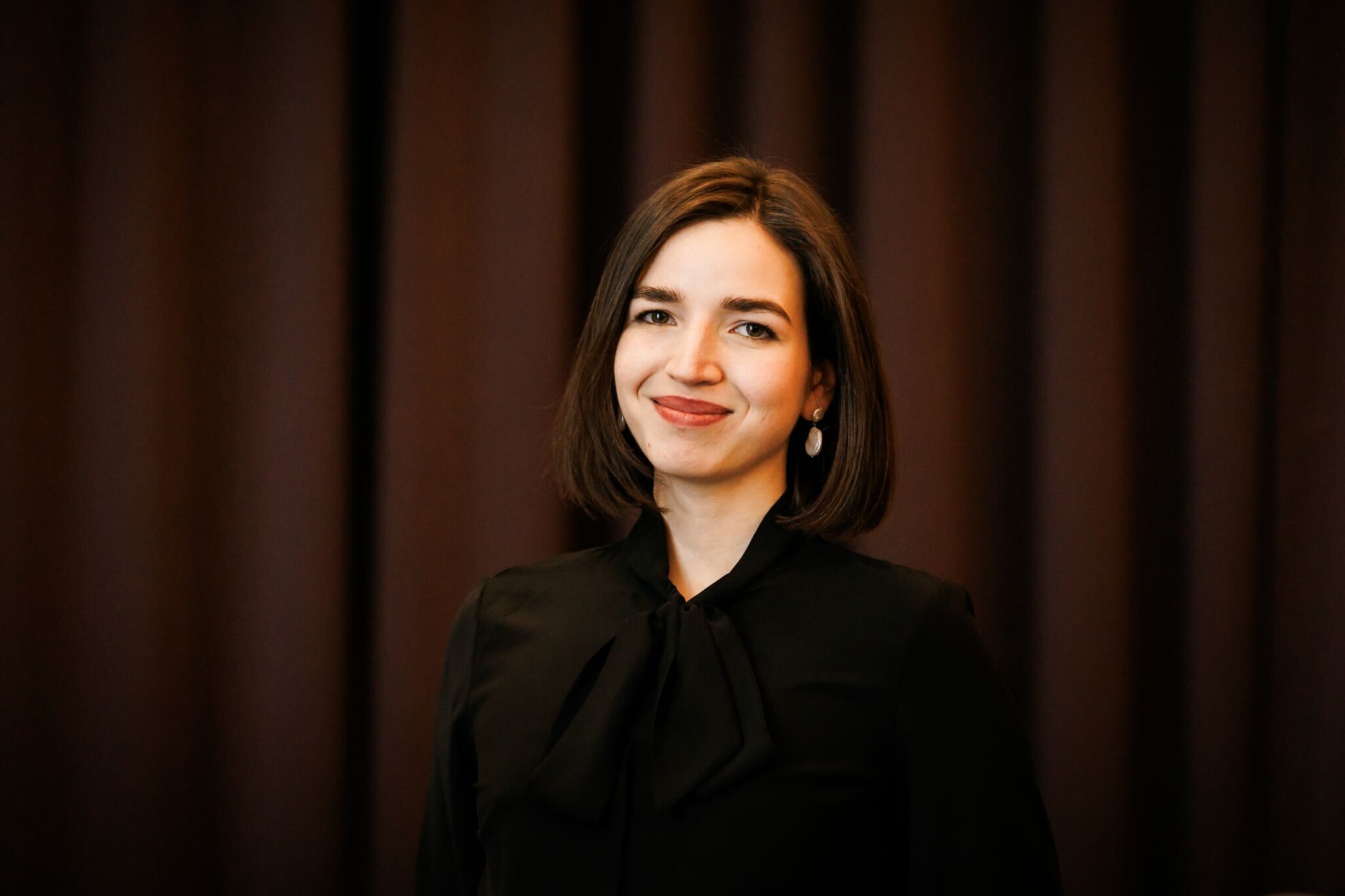
Daria Larionov
Daria Larionov is a Moldovan practitioner working with the Global Network of Women Peacebuilders,
focusing on youth, peace and security and women, peace and security in Eastern Europe and the South
Caucasus. Her work centers on supporting local civil society organizations, strengthening youth
participation in peace processes and integrating grassroots perspectives into policy and programming. She
has experience in research, program design and monitoring, evaluation and learning, and has contributed to
regional and international initiatives on peacebuilding and social cohesion.