
More than a decade after the 2011 uprising, peacebuilding in Libya remains severely hampered by political fragmentation, militarisation, and fragile state institutions. While the fall of the Muammar Qadhafi regime created openings for political pluralism, it also led to the collapse of central authority and the rise of multiple competing power centers. Instead of a clear post-conflict transition, Libya has experienced a prolonged crisis characterised by armed conflict, contested legitimacy, and external intervention (Lacher, 2014; UNSMIL, 2020).
Although the October 2020 nationwide ceasefire helped reduce large-scale hostilities, it did not address the underlying fragmentation of authority that continues to obstruct a stable political settlement (UNSMIL, 2020). In this article, peacebuilding refers to the long-term process of re-establishing legitimate governance through security arrangements, functional institutions, accountable economic management, and credible justice mechanisms. Peacebuilding in Libya must therefore be understood not as a straightforward transition but as a long-term endeavour of negotiating authority, governance, and accountability within a fragmented political landscape. The collapse of the electoral roadmap, most notably the failure to hold the national elections scheduled for December 2021, has further entrenched contested legitimacy and extended the transitional period.
A major obstacle to peacebuilding has been the inability to establish a unified security apparatus. Armed groups that arose during the 2011 conflict became deeply integrated into local governance and economic systems, often providing security, employment, and dispute resolution where effective state institutions were lacking. According to Wofram Lacher (2014), these groups developed divergent interests that resisted centralisation, hindering efforts at security sector reform. Militias became embedded political actors whose influence complicated state-building initiatives.
Research by the Clingendael Institute (2018) shows that security governance in Libya is highly localised. Municipal councils, community leaders, and informal power brokers often play a bigger role in maintaining order than national authorities. In some cases, locally negotiated arrangements and bottom-up approaches to peace have reduced violence more effectively than national political agreements (UNDP, 2023). This highlights a key challenge for peacebuilding: national-level agreements have limited impact if they do not engage with local governance structures that hold absolute authority on the ground.
The legitimacy of political institutions remains another vital issue. Since 2014, Libya has had competing governments, postponed elections, and repeated transitional arrangements. These developments have diminished public trust in official political processes and strengthened perceptions of elite control. The roadmap developed by the Libyan Political Dialogue Forum, under UN guidance, aimed to address this fragmentation by establishing a unified interim executive authority and a path toward elections (UNSMIL, 2020). However, implementation has been inconsistent, and political rivalry continues to hinder institutional stability.
Economic governance is closely tied to Libya’s conflict dynamics. The country’s dependence on hydrocarbon revenues, combined with weak oversight mechanisms, has enabled armed and political actors to exploit economic infrastructure for leverage. The World Bank (2025) reports that oil production shutdowns and blockades have regularly disrupted public finances, worsening economic hardship and hindering service delivery. These actions not only deepen grievances but also create incentives for ongoing conflict, as control over financial assets becomes a tool for political power.
The Natural Resource Governance Institute (2021) highlights that deficiencies in transparency and accountability in Libya’s oil and gas sector have reinforced elite competition rather than fostering national development. Peacebuilding efforts that neglect economic governance risk addressing only symptoms rather than the underlying drivers of instability. Improving public financial management, strengthening oversight institutions, and ensuring a fairer distribution of revenues are therefore essential components of sustainable peace.
International involvement has had a mixed impact on Libya’s peacebuilding process. While UN-led mediation has prevented large-scale escalation at crucial moments, external backing for rival factions has often worsened fragmentation. The European Council on Foreign Relations (2021) contends that competing foreign interventions have undermined diplomatic unity and diminished incentives for compromise among Libyan actors. Achieving sustainable peacebuilding requires moving away from externally driven power-broking and towards supporting inclusive, Libyan-led processes.
Human rights abuses and impunity create additional hurdles to peace. Reports by Amnesty International (2025) and Human Rights Watch (2025) document widespread violations, including arbitrary detention, enforced disappearances, and abuses by armed groups and security forces. The UN Independent Fact-Finding Mission on Libya concluded that ongoing impunity has entrenched cycles of violence and undermined chances for reconciliation (UN Human Rights Council, 2023). Peacebuilding efforts that focus on short-term stability over accountability risk increasing grievances and undermining the legitimacy of future institutions.
Transitional justice is therefore a vital yet underdeveloped pillar of peacebuilding in Libya. While accountability processes face political and security challenges, the lack of credible justice mechanisms weakens trust in state institutions and intensifies localised conflict. In practice, justice gaps are worsened by fragmented authority and the influence of armed actors over detention systems and local security arrangements, which restrict victims’ access to remedies and discourage reporting. A practical transitional justice approach, therefore, requires more than symbolic commitments: it must combine feasible domestic pathways (truth-seeking, reparations, vetting of perpetrators of violence, and institutional reform) with targeted international mechanisms that national processes cannot operate without external support. Addressing past abuses through a combination of national and international mechanisms remains essential for rebuilding social cohesion and restoring confidence in governance.
Peacebuilding in Libya faces challenges from fractured authority, contested legitimacy, economic exploitation, and deep-rooted impunity. Although local governance structures and international mediation have reduced violence in some areas, they have not addressed the underlying causes of the conflict. Achieving lasting peace will require ongoing efforts in institutional reform, economic transparency, and justice, as well as inclusive political processes that reflect Libya’s complex social and regional realities. Without addressing these core issues, peacebuilding efforts are likely to remain fragile and reversible.
Keywords: Libya, peacebuilding, governance, security, political, politics, conflict, conflict resolution, peace, Libyan, fragmentation

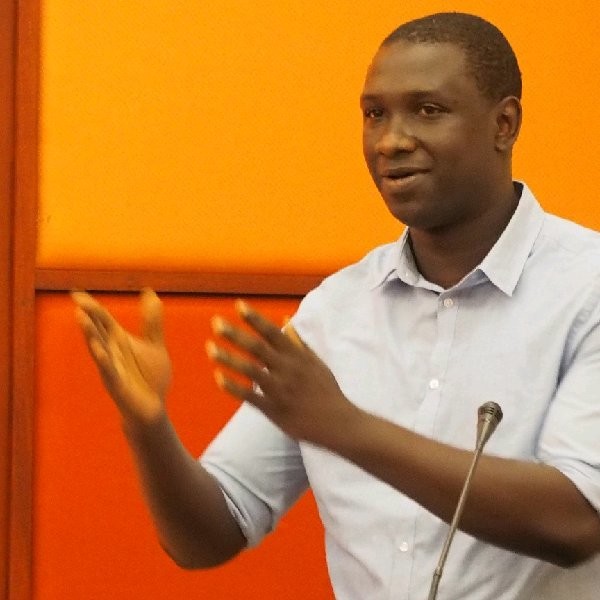
Dr. Ibrahim Bangura is an Associate Professor in the Department of Peace and Conflict Studies at Fourah Bay College, University of Sierra Leone. Currently, he is a visiting fellow collaborating with Dr. John Gledhill at the Department of International Development, University of Oxford under the Africa Oxford Initiative (AfOx) Visiting Fellowship programme.
Dr. Bangura’s research examines peacebuilding, gender, youth engagement, and post-war transitions in West Africa. With a PhD in Economics from HHL Leipzig Graduate School of Management, he has published extensively on disarmament, peacebuilding, and social movements in Africa. His recent work includes two edited volumes on youth-led movements and the reintegration of ex-combatants in Africa. Additionally, Dr. Bangura has held roles in human rights and post-conflict transition initiatives in Sierra Leone, and as a Result Oriented Monitoring (ROM) expert, he has assessed over 100 European Union funded projects and programmes in approximately 30 countries in Africa, In 2020, he developed the Women, Peace and Security Guidelines for the Economic Community of West African States (ECOWAS), and he is currently finalising the Gender Framework for Peace Support Operations of ECOWAS, adding practical experience to his academic expertise.