

Colombia has long been a country whose name has been synonymous with violence. Murders, armed conflict, and the plight of victims tend to dominate international news and popular media, from headlines to television shows like Narcos. In the 1940s and 1950s, the country experienced La Violencia, a time of extreme bloodshed between the conservatives and liberals. The 1980s and 1990s saw the rise of the drug trade, including figures like Pablo Escobar. The early 2000s were marked by mass kidnappings and extortion as internal armed conflict increased. Even in August 2025, the assassination of presidential candidate Miguel Uribe Turbay demonstrated the continued political violence in Colombia. These moments and eras reflect deep and troubling realities: The National Historic Memory Center estimates that over 260,000 people were killed in the various armed conflicts from 1958 to 2018.
Violence, of course, in a context like Colombia is complex and multifaceted. It is driven by historic oppression and legacies, underinvestment and disinterest from the state, economics and geopolitics, and more.
But across the country’s history, in the face of the myriad forms of violence, there has also been resilience, strength, and movements for peace along with demobilization, disarmament, and re-integration. The latter coalesced into a strong formal and more grassroots movement in the 2010s during the peace process between the government (of then-President Juan Manuel Santos) and the longest existing armed revolutionary group, the Revolutionary Armed Forces of Colombia – People’s Army (FARC-EP). Accompanying the comprehensive and years-long process leading up to the peace agreement signed in 2016, the government and civil society took various efforts to build a movement and foundation for a widespread peace across Colombia. This included a truth and reconciliation process, discourses and the promotion of peace, and a peace education law in 2015.
Much of these efforts centered on the idea that young people could be the foundation for a peaceful future in Colombia. Santos himself told them “to make peace [theirs]” and that they would lead the country on a different path. Young people’s engagement and leadership were held up as both a need and a defining characteristic of what Colombia could be. The peace education law, for example, mandated the inclusion of two of 12 themes across all levels from preschool through postsecondary. These themes were diverse, ranging from historical memory to justice and human rights to protection of the nation’s cultural and natural resources. Each educational institution had to integrate two of these themes, but could choose which ones and how.
But how did young people understand their role in peacebuilding? And how did they make sense of these “tools” (that is, the peace education in their schools, churches, youth groups, and more)?
In 2016 and 2017, I conducted hundreds of interviews with young people aged 15 to 18 across various areas of Colombia to explore these questions. I was interested in how they were even thinking about the idea of peace and then going one step further to see how they might be connecting their developing identities to these ideas being proposed by the government.
Ultimately, the answer to those questions defies any simple, universal theme. Young people in Cucuta talked about peace as related to the conflict with Venezuela, in poor areas of Medellin as related to local violence, and in wealthy schools in the capital of Bogota as living free from fear. There were some commonalities across contexts (both geographical and socioeconomic), as many young people mirrored government discourses by talking about peace beginning within them and then emerging outward. To engage with peace, they had to be at peace with themselves. They also then talked about levels, from peace with their peers and families, to peace in their communities, to peace more broadly across Colombian society.
Still, in all cases, local context and personal experience mattered. Young people weren’t just passive receptacles for governmental discourses. Many from lower resourced communities rejected the idea that they could contribute to national peace, often pointing towards its distance from their everyday lives. Some highlighted the challenges even in the walls outside of their school, talking about gangs and drugs as motivators of violence that they could not address. Peers from higher resource contexts tended to display greater efficacy in their conceptualizations by talking about how they would be beginning locally, and these small actions could build to a bigger peace. Some talked about their place as giving a “granito de arena,” or a grain of sand that could then contribute to a broader movement in society.
A decade after the peace education mandate in Colombia, the broader efforts have all but collapsed. There have been many targeted killings of human rights and peace activists, re-mobilization of armed combatants, and numerous challenges with moving parts of the accords forward. The energy, dynamism, and omnipresence of peace education with youth have faded noticeably. What can we take away from the research with these young people, and how things have progressed since?
First, peace is a concept shaped by time, place, personal experience, social dynamics, and public discourses. It is, of course, an idea and a word so many of us recognize, but our understandings of it and who we are and can be in relation to “peace” in society are diverse and shaped by our experiences and positionalities. Therefore, we must always be open and thoughtful about what each of us understands by this idea. For young people at the cusp of defining their life trajectories and grappling with their place in the world, attention to these cognitive dynamics might be particularly important.
Second, peace education is almost certainly valuable, but not enough. We can give young people “tools” but we also have to work with them on seeing these tools as able to be implemented and able to create change. There must be interactive possibilities, openness to structural hurdles, and recognition of their own experiences. An approach rooted in critical consciousness—as a “critical peace education” approach articulated by Monisha Bajaj and others—may be best situated for this transformative potential. Such a framework draws on ideas of Paolo Freire to engage students in their lived experiences and action toward dismantling systemic injustice and oppression. It can promote both a recognition of structural forces and a sense of agency in the face of them.
And lastly, as other scholars of youth in Colombia like Helen Berents have noted, we must also be open to the ways that young people are constantly building peace beyond our neoliberal frameworks. The absence of murder matters. Demobilization of armed groups is critical. But the daily ways that young people navigate violence as they survive, thrive, and engage prosocially cannot be ignored either. And even today, amid a more pessimistic atmosphere in Colombia, young people are continuing this daily engagement with peace through their intimate relationships and contexts.
Keywords: Colombia, Colombian, education, peace education, youth, peacebuilding, conflict, conflict resolution, FARC

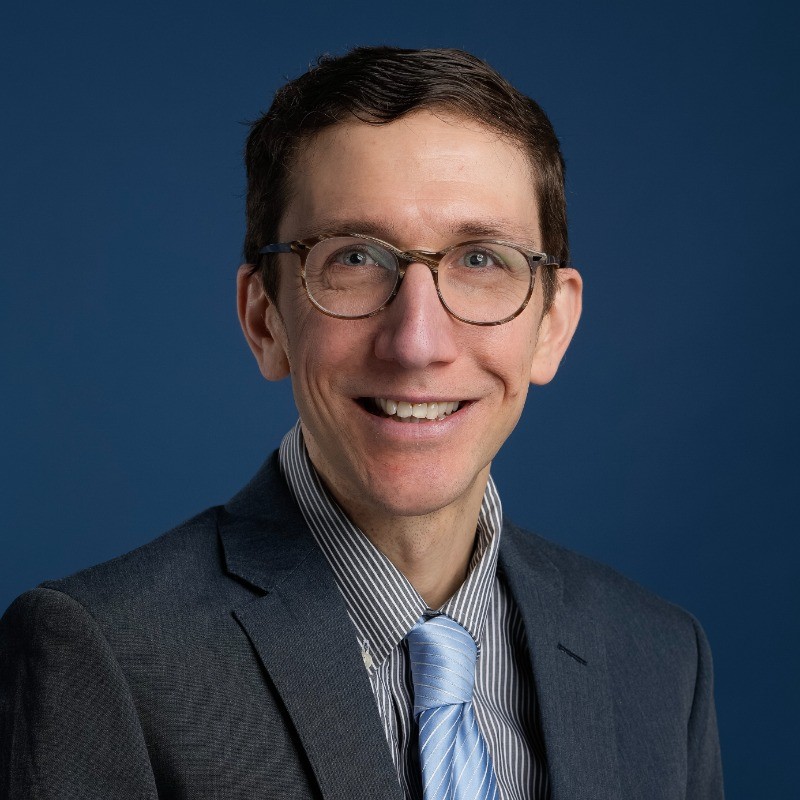
Gabriel Velez is an associate professor and developmental psychologist in the Department of Educational Policy and Leadership (EDPL) in the College of Education at Marquette University, with a joint appointment in psychology. Dr. Velez studies identity development in adolescents and emerging adults, particularly in relation to their educational experiences, including restorative justice, peace education, the transition to college, and artificial intelligence. He also serves as the Faculty Director of the Black and Latino/a Ecosystem and Support Transition (BLEST) Hub at Marquette, and the Chair of the Faculty Research Team for the Center for Peacemaking. Dr. Velez has a forthcoming book entitled, Making Meaning of Justice and Peace: A Developmental Lens to Restorative Justice and Peace Education, and is working on another manuscript on adolescent development, education, and artificial intelligence, both with Cambridge University Press. He received a BA in History and Literature from Harvard University, and an MA and PhD from the University of Chicago in Comparative Human Development.