

Multilateral peacebuilding endeavors have had a mixed record at best. Several post-war societies have either relapsed into violent conflict or undergone decades of international peacebuilding assistance with uncertain outcomes. While the reasons for the success and failure of peace(building) processes are complex, many observers have noted the ubiquity of standardized or template approaches. A commonly cited explanation for this holds that peacebuilding organizations at the UN and beyond are large international bureaucracies that seek to rationalize their work. Having a ‘template for peace(building)’ that can be applied anywhere would thus help streamline their work.
Peacebuilding organizations dedicate considerable time and effort towards best practice learning and improvement. Their staff at headquarters and the field level have comprehensive experience working in post-war societies. Yet these organizations do not seem to apply their context-specific expertise. As peacebuilding interventions have often been marred by setbacks and failures, countless studies, reports, and UN panels have emphasized the importance of local knowledge and of addressing local conflict dynamics, issues, and agendas, including political ones. What, then, compels international organizations to ignore their own expertise and rely on standardized approaches? In other words, why can’t this lesson be learned?
To make sense of this apparent puzzle, we need to consider that peacebuilding was originally conceived of as a multilateral effort to assist the implementation of an existing peace agreement. In other words, the UN and other international organizations were supposed to provide local actors with technical expertise for implementing a settlement whose political aspects had already been agreed upon. Following some early peacebuilding successes in the aftermath of UN-sponsored peace negotiations, this conception of peacebuilding became a standard practice from the early 1990s. The post-Cold War period was also a time of declining aid budgets for development and humanitarian organizations. Since these organizations had often already worked in conflict-affected countries and had the technical expertise in areas such as refugee return, rural development, or institutional reform, they were quick to add peacebuilding to their portfolios.
International humanitarian and development organizations are committed to the twin principles of impartiality and/or neutrality. Unsurprisingly, however, these principles are frequently at odds with the highly political goals of peacebuilding interventions. If a comprehensive political settlement has been endorsed by all parties, these organizations can ‘implement’ their initiatives in line with their principles. This was the case in Namibia following the Tripartite Accords of 1988, or in Timor-Leste following the post-referendum violence of 1999 and Indonesia’s subsequent acquiescence to international intervention. However, if a political settlement has either been enforced or remains otherwise contested, humanitarian and development organizations face an acute dilemma regarding their professed claims to impartiality and/or neutrality. The ongoing efforts to ‘implement’ the 1995 Dayton Accords that ended the war in Bosnia and Herzegovina provide ample evidence of UN systems agencies trying to enact controversial aspects of that agreement whilst retaining their impartial and/or neutral stances. As development and humanitarian organizations persistently encountered ‘obstacles’ to their ‘implementation’ efforts, they thus began to revise and reframe their practices in ways that claimed to uphold their impartial stance in otherwise highly contested settings. Examples of this include reframing the causes of conflict in purely structural terms that are devoid of any present-day political agency, or the redefinition of impartiality against purportedly universal standards rather than the perceptions of local actors. What all these approaches have in common is that they omit the political content of peacebuilding interventions to carve out a legitimate role for humanitarian and development organizations. This is why standardized templates are so ubiquitous in the peacebuilding field. They allow humanitarian and development organizations to frame their highly political interventions in seemingly neutral and universally agreed terms.
The functions and meanings of claiming impartiality and neutrality vary for humanitarian and development organizations. Among humanitarian organizations, acting impartially implies rendering assistance based on need. For them, impartiality is not only a means to gaining access to contested settings, but also fundamental to the overarching principle of ‘humanity. Given the importance of impartiality in mainstream humanitarian practice, it is thus little surprising that many humanitarian actors have resisted UN efforts to coordinate and integrate peacebuilding actors under common strategic frameworks. Nonetheless, humanitarian organizations like the UN Refugee Agency (UNHCR) have continuously been involved in the political objectives of peacebuilding interventions. See, for instance, UNHCR’s involvement in the politically charged return of refugees and IDPs in Bosnia and Herzegovina and in Timor-Leste.
The situation is slightly different when it comes to development organizations, which are of two kinds: international and bilateral. International development organizations like the UN Development Programme are committed to neutrality in the domestic affairs of states, but bilateral development organizations such as USAID, GIZ, or SIDA are not. Both kinds of organizations usually work based on agreements with the host state government. The degree to which development organizations are willing to address conflict and contestation depends on their relationship with the host state government. On one hand, development organizations such as the UNDP seek to preserve their reputation as a partner to governments, particular given the rise of ‘new’ donors. On the other hand, the proximity to government authorities likely limits their capacity to engage in truly transformative peacebuilding interventions.
Why should any of this be a problem? After all, it could be argued that development agencies are simply not equipped to engage in political contestation and should restrict their efforts to redressing structural issues such as inequality. However peacebuilding is usually conducted in heavily contested environments that require some form of ‘local peacemaking.’ Even if one was to follow the propositions of the liberal peace paradigm, peacebuilding cannot be successful if it is restricted to establishing institutions for the peaceful negotiation of future conflicts, without being willing to address ongoing ‘political’ issues on those precise terms. Against this backdrop, humanitarian and development organizations arguably are simply not the most suitable candidates for peacebuilding, or at the very least not on their own. This conundrum might provide part of the answer as to why peacebuilding fails to deliver on its promises, but it accounts for why peacebuilding persists in its current ‘depoliticized’ and standardized form.

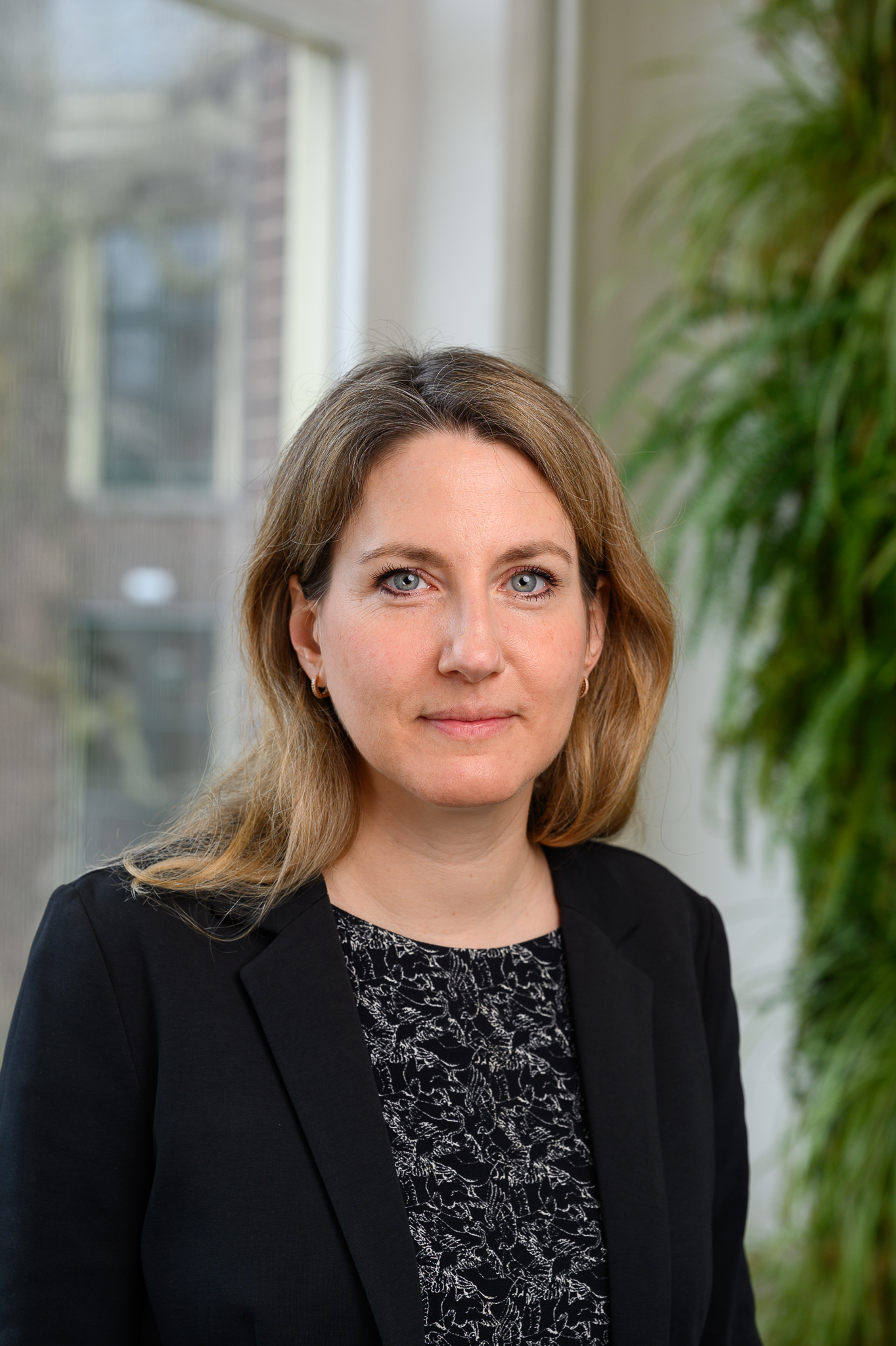
Dr Andrea Warnecke is an Assistant Professor at the Institute for History and International
Studies at Leiden University, the Netherlands. Her principal areas of expertise include
international governmental and non-governmental organizations, peacebuilding,
humanitarianism, and crisis governance with a particular focus on institutional knowledge
practices and legitimacy. Andrea’s research is informed by more than eight years of
experience as a Senior Researcher and Consultant in international organizations, NGOs, and
on behalf of government agencies. She holds a PhD in Social and Political Sciences from the
European University Institute (EUI) and an MA in History from the University of Bochum.
Her work has appeared in International Peacekeeping, the Journal of Intervention and
Statebuilding, and the International Journal of Peace Studies. From 2018 to 2020, she was a
Marie Skłodowska-Curie Fellow at the Department of International Politics, Aberystwyth
University.
Website: https://www.universiteitleiden.nl/en/staffmembers/andrea-warnecke#tab-1
Email: a.u.warnecke@hum.leidenuniv.nl